Le VPN For Enhanced Security Of IoT
Look around your home and count the devices that talk to the internet: the smart TV, the voice assistant, the video doorbell, the thermostat, the robot vacuum, the baby monitor, maybe even the washing machine. This is the Internet of Things - and every one of those gadgets is a small computer on your network. The convenience is real. So is the risk: IoT devices are consistently the weakest link in home cybersecurity, and attackers know it.
Why IoT Devices Are So Easy To Attack
Your laptop gets security updates every month and runs antivirus software. Your smart plug does not. IoT devices are built to a price, and security is usually the first corner cut. The common weaknesses have barely changed in a decade:
- Default or unchangeable passwords. Many devices ship with the same factory credentials on every unit, and plenty of owners never change them. Attackers scan the internet for these devices automatically.
- No updates. Manufacturers often abandon devices within a couple of years - or never patch them at all - leaving known vulnerabilities open forever.
- Unencrypted traffic. Some devices send data, including audio and video, across the network with weak or no encryption, where it can be intercepted.
- Chatty by design. IoT gadgets constantly phone home to manufacturers' servers, leaking usage patterns that reveal when you're home, when you sleep, and what you do.
The consequences aren’t theoretical. Compromised cameras and baby monitors have been used to spy on families. Botnets built from hijacked IoT devices have launched some of the largest denial-of-service attacks ever recorded. And once a single weak device is breached, an attacker is inside your network, one step away from your laptop and phone.
Regulators have taken notice - the US, UK and EU have all introduced rules pushing manufacturers toward baseline standards like unique passwords and mandatory update periods. That pressure helps for future devices, but it does nothing for the millions of vulnerable gadgets already installed in homes. Protecting your network remains your job.
How A VPN Strengthens IoT Security
A VPN encrypts your internet traffic and hides your real IP address. For IoT security, that matters in two ways.
First, your public IP address is the front door to your home network. Attackers who know it can probe your router for open ports and exposed devices. When your traffic runs through a VPN, outsiders see the VPN server’s address rather than your home’s, which makes your network a far harder target to find and profile.
Second, encryption protects the data in transit. Traffic that leaves your network inside the VPN tunnel can’t be read or tampered with by anyone sitting between you and the VPN server - whether that’s a snooping ISP, an attacker on the line, or anyone monitoring the Wi-Fi.
The Router Is The Key
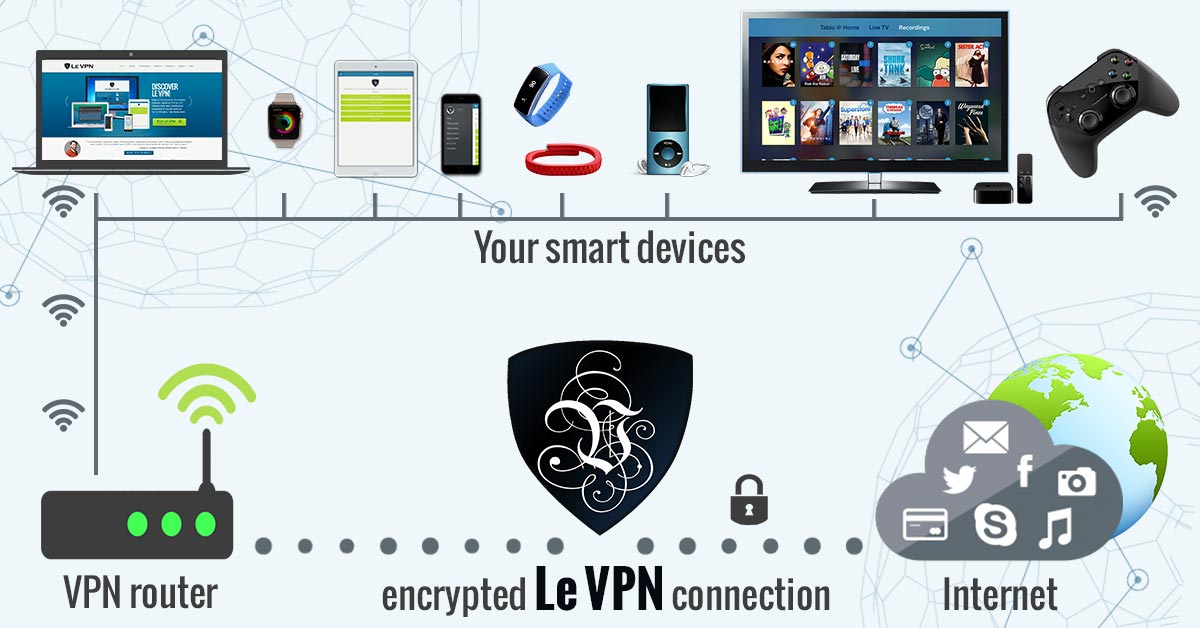
Here’s the practical problem: your smart bulb can’t run a VPN app. Most IoT devices can’t. The answer is to install the VPN one level up, on your router. A VPN-enabled router sends the traffic of every connected device - including all the gadgets that could never run their own VPN - through the encrypted tunnel automatically. One setup protects the whole house, and it doesn’t count against your device limit the way individual installs do.
Le VPN works with VPN-capable router firmware, and the same subscription still covers up to 10 simultaneous connections for the devices you carry out the door - your phone and laptop stay protected on public Wi-Fi, where they’re most exposed.
Practical IoT Security Checklist
A VPN is a strong layer, but combine it with basic hygiene:
- Change every default password the day a device comes out of the box.
- Install firmware updates when they exist - check the manufacturer's app periodically.
- Put IoT devices on your router's guest network so a compromised gadget can't reach your computers.
- Disable features you don't use, especially remote access and UPnP.
- Run a VPN on your router to encrypt traffic and hide your network's address.
Why Le VPN
Le VPN protects your connected life with modern protocols - OpenVPN, WireGuard, Stealth WireGuard and IPSec/IKEv2 - and servers in 100+ locations worldwide, so there’s always a fast server nearby. Apps for Windows, macOS, iOS and Android cover the devices you use directly, router support covers everything else, and features like DNS-level Threat Protection block known malicious domains before they ever load. Every plan comes with a 30-day money-back guarantee on your first purchase, so you can secure your smart home risk-free - start on the subscription page.
The Internet of Things isn’t going away; your home will only get more connected from here. Lock the front door now, and every device behind it gets safer.
About the author
Le VPN Blog Contributor
Shalini Nagaonkar is a longtime contributor to the Le VPN blog, writing on cyber security, digital privacy, and how to stay safe online. Her articles cover everything from practical VPN use cases to the latest developments in online security.
Articles by Shalini Nagaonkar →