
OpenVPN Installation on Windows
The easiest way to use OpenVPN on Windows is our app - it handles everything automatically. Prefer to configure OpenVPN manually? This guide covers both.

Recommended: use the Le VPN app
For the best speed and security, use our new Windows app with Wireguard or Stealth Wireguard - it's faster and lighter than OpenVPN, with no configuration files or manual settings. Download the app, sign in with your VPN credentials, pick a server, and click Connect.
Specifically need OpenVPN - an older system, a router, or a network that only allows it? Our legacy Windows app supports OpenVPN natively, or follow the manual setup below.
Manual OpenVPN Setup on Windows
Using OpenVPN GUI instead of the Le VPN app? Follow these steps.
1
Install OpenVPN GUI
Download and install the free OpenVPN GUI client. Accept the default options during setup.
2
Add your configuration files
Download your OpenVPN config files and extract them into C:\Program Files\OpenVPN\config. Only keep the server locations you plan to use - OpenVPN GUI supports a limited number of loaded configs.
3
Connect
Right-click the OpenVPN icon in the system tray, choose your server, click Connect, and enter your VPN username and password.
Note for older Windows versions
On some systems, OpenVPN GUI needs administrator rights to manage the network connection. Right-click the OpenVPN icon on your desktop, open Properties > Compatibility, and enable Run this program as an administrator. Then always launch and connect using "Run as administrator".
Once connected, confirm it worked by checking your IP address - it should show the VPN server's location, not your own. If it still shows your real IP, disconnect and reconnect.
OpenVPN configuration files
Your Le VPN subscription includes ready-made OpenVPN configuration files for every server location, bundled by port so you can pick whichever works best on your network.
Download the ZIP for the port you want: UDP 53, TCP 80, or TCP 443. Each ZIP has one .ovpn file per server for that port (e.g. Le-VPN-Argentina-53.ovpn). If one port is blocked on your network, just download a different port's ZIP.

Quick recap
This guide sets up OpenVPN on Windows two ways: the easy route with the Le VPN Windows app (which can run the faster Wireguard or Stealth Wireguard instead), or a manual OpenVPN GUI setup using downloadable configuration files. Manual setup means installing OpenVPN GUI, dropping the right config files into the OpenVPN config folder, and connecting with your VPN credentials.
- Platform: Windows, using the OpenVPN protocol (app or manual OpenVPN GUI)
- Manual method: install OpenVPN GUI, place
.ovpnfiles inC:\Program Files\OpenVPN\config, then connect from the system tray - Config files come as per-port ZIPs (UDP 53, TCP 80, TCP 443) - switch ports if one is blocked on your network
- Sign in with your Le VPN username and password; older Windows may need OpenVPN GUI run as administrator
- One Le VPN account covers up to 10 devices at the same time; the app also supports faster Wireguard
Finding your VPN credentials
VPN connection credentials
Used to connect via OpenVPN GUI or the Le VPN app. Sent to your email when you activated your account - not the same as your client area login. Forgot them? Log into the client area and use the menu to view or reset your VPN password.
Client area login
The email and password you use to sign into le-vpn.com/clients to manage your subscription and download configuration files. Forgot it? Reset your client area password here.
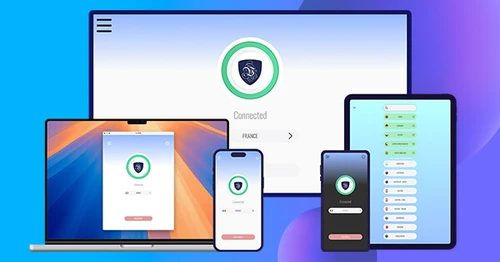
Download the latest Le VPN app for all devices




Also available on


30-Day Money-Back Guarantee
Try Le VPN risk-free! If you're not satisfied within the first 30 days, let us know and we'll refund your money.