Tor Vs VPN-Make The Right Choice
People want to browse the internet anonymously for all sorts of reasons — dodging trackers, escaping censorship, protecting sources, or simply keeping their business their own. The two most popular tools for the job are Tor and a virtual private network, and the “Tor vs VPN” question comes up constantly. They solve overlapping problems in very different ways, and the right choice depends on what you’re actually trying to do. Let’s compare them properly.
What is Tor and how does it work?
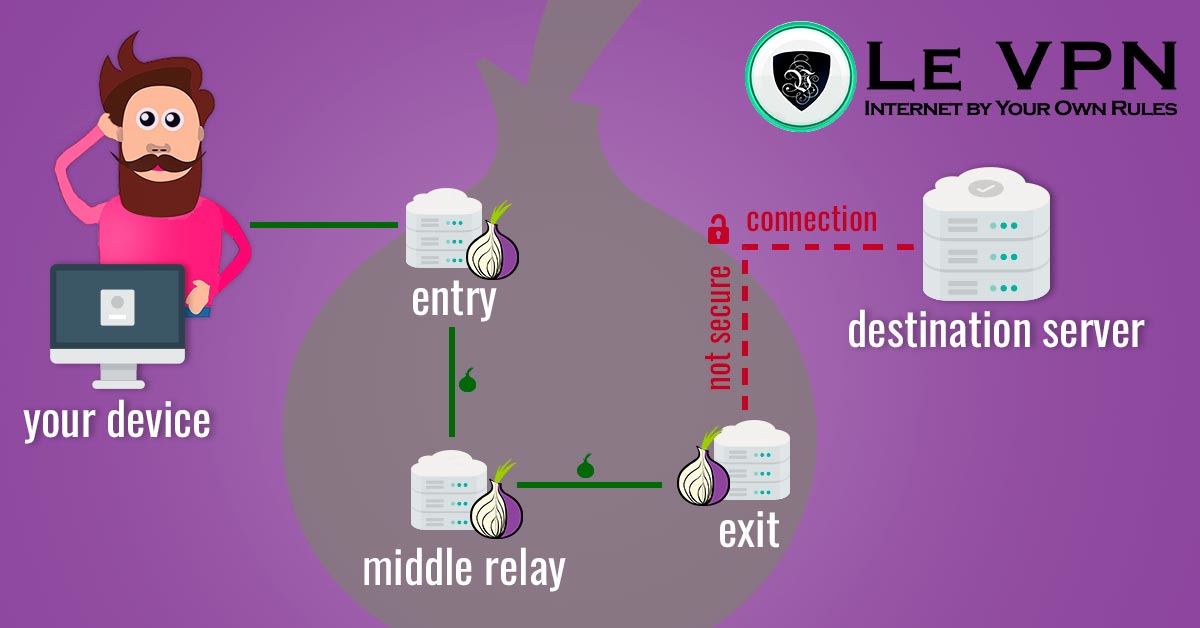
Tor stands for The Onion Router. It’s a free, decentralized network run by volunteers. When you browse through the Tor Browser, your connection doesn’t go straight to the website — it bounces through at least three randomly chosen relay nodes, with a layer of encryption peeled off at each hop (hence “onion”). No single relay knows both who you are and where you’re going, so the website sees the exit node’s IP address, not yours.
Tor’s strengths are real: it’s free, it provides very strong anonymity against traffic analysis, and it’s a lifeline for journalists, activists, and whistleblowers.
But the design has costs:
- Speed. Bouncing through three volunteer-run relays around the world makes browsing noticeably slow. Streaming video, large downloads, and gaming are effectively off the table.
- The exit node problem. Traffic leaves the last relay on its way to the website. If the site doesn't use HTTPS, the exit node operator can read — or tamper with — your traffic.
- Attention. Because Tor is also used for criminal activity on the dark web, its traffic attracts scrutiny. Simply connecting to Tor is visible to your ISP and can flag you for closer attention; some countries and many websites block Tor exit nodes outright.
- Scope. Tor protects only what goes through the Tor Browser (or specifically configured apps) — the rest of your device's traffic is untouched.
What is a VPN and how does it work?
A VPN creates an encrypted tunnel between your device and a server operated by your provider, in a location you choose. Every application on the device — browser, email, games, streaming apps — travels through that tunnel. The websites you visit see the server’s IP address, your ISP sees only encrypted traffic, and on public Wi-Fi, snoopers get nothing readable.
The practical benefits:
- Speed. One hop through a high-bandwidth commercial server, with modern protocols like WireGuard, means speeds close to your normal connection — fast enough for HD streaming, downloads, and gaming.
- Whole-device protection, not just one browser, and up to 5 devices simultaneously with Le VPN.
- Location choice. You pick the exit country deliberately — a UK server for BBC and ITV, a US server for American services — which makes a VPN vastly better than Tor for bypassing geo-restrictions and censorship.
- Trust model. Instead of trusting unknown exit-node volunteers, you trust one accountable provider. That makes provider choice the critical decision: for assured privacy, your activity logs must not be stored.
Tor vs VPN: which should you choose?
- Everyday privacy, streaming, travel, public Wi-Fi, unblocking content: a VPN wins decisively. It's fast, covers everything on the device, and lets you choose your virtual location.
- Maximum anonymity for high-stakes situations (whistleblowing, evading a hostile state as a target): Tor's multi-hop design is purpose-built for this, and slowness is the accepted price.
- Belt and suspenders: the two can be combined — connect to your VPN first, then open Tor Browser. Your ISP no longer sees that you're using Tor at all, and the Tor entry node never learns your real IP.
For the overwhelming majority of users and uses, the VPN is the right daily driver, with browsing speed that isn’t compromised. It’s also the only realistic option for devices beyond your computer: smart TVs, game consoles, and IoT devices can’t run Tor, but they can sit behind a VPN — either directly or through a VPN-enabled router that protects the whole home network.
Choosing a quality VPN provider
The VPN model concentrates trust in the provider, so choose carefully — and don’t even look at free ones; they finance themselves with your data, which defeats the purpose. Here’s what Le VPN brings to the comparison:
- Privacy first: your browsing activity isn't logged and stored — the point on which your whole anonymity rests.
- Strong encryption (AES-256) and modern protocols: OpenVPN, WireGuard, Stealth WireGuard, and IPSec/IKEv2 on iOS.
- Censorship resistance: Stealth WireGuard obfuscates VPN traffic to pass deep packet inspection in restrictive countries — something plain Tor connections often can't manage where Tor is blocked.
- Servers in 100+ locations across the Americas, Europe, the Middle East, Asia-Pacific and Africa — browse the full list on the servers page.
- Risk-free trial: a 30-day money-back guarantee on your first purchase.
Tor remains a remarkable project for the situations that demand it. But for fast, practical, everyday anonymity across all your devices, a quality VPN is the better choice. Opt for Le VPN and browse anonymously without the trade-offs.