How To Create An Anonymous Email Account
Want to keep your email private, safe, secret and anonymous? Read on to find out how to create an anonymous email account - and, just as importantly, how to keep it anonymous.
Anonymous Email: Not As Easy As You Think
Email has been a privacy problem since the day it was invented. Every message carries metadata - sender, recipient, timestamps, and often the IP address it was sent from - and mainstream email providers scan, index, and monetize what flows through their servers.
Setting up an anonymous email account is easy or hard depending on how anonymous you need it to be. If you just want an address your coworkers or family don’t know about, any new account will do. If you want an address that can’t be traced back to you by the recipient, by the provider, or by anyone with the skills to look - that takes deliberate steps, and the biggest threats to your anonymity are the traces you leave without thinking.
Why Send Anonymous Email?
There are plenty of legitimate reasons to keep your identity out of your inbox:
- Whistleblowing - reporting fraud or wrongdoing at work or informing on illegal activities without exposing yourself to retaliation;
- Contacting journalists or authorities with sensitive information;
- Signing up for websites, newsletters, and trials without feeding your real address to spam lists and data brokers;
- Keeping your professional and personal identities separate;
- Escaping an abusive situation and communicating without being monitored;
- Simply not wanting an email provider to build an advertising profile from your correspondence.
One thing to remember before you start: the internet is trying to find you. If you set up an anonymous account and then use it exactly like your normal one - same device, same home connection, same habits, same contacts - the data points pile up until a profiling algorithm says: “this anonymous user looks exactly like this person we already know.” Anonymity is a discipline, not a checkbox.
Choosing The Right Kind Of Provider
Choosing where to open the account is the first real decision, and there are three broad categories, each suited to a different job:
- Privacy-focused email providers. Services built around end-to-end encryption and minimal data collection, which let you register without a name, phone number, or existing address. This is the right choice for an anonymous inbox you'll use over time - you can send, receive, and keep correspondence encrypted at rest.
- Disposable / temporary inboxes. Services that give you a throwaway address with no sign-up at all, with messages that self-destruct after minutes, hours, or days. Perfect for receiving a one-time verification link when registering on a website you don't trust with your real address. Never use them for anything you want to keep.
- Anonymous remailers / send-only services. Web forms that let you send a message with no account and no reply path, stripping identifying headers along the way. Useful for one-off anonymous tips and warnings - but check the service's policy: some log sender IP addresses, which defeats the purpose unless you're behind a VPN.
With any free service, always ask the question: why is it free? If the answer is advertising, then tracking, monitoring, and analysis of your messages - the very data you’re trying to protect - is the price. Privacy-respecting providers are typically funded by paid tiers instead; the free tier exists, but the business model isn’t your data.
How To Create An Anonymous Email Account, The Extreme Version
If your threat model is serious - you need the account unlinkable to you even under determined scrutiny - the standard advice looks like this:
- Solve verification first. Many providers demand a phone number. A number tied to your name undoes everything, so either choose a provider that doesn't require phone verification or use a prepaid SIM bought with cash.
- Use a clean device. Your everyday computer and phone are saturated with cookies, logged-in apps, and identifiers that link everything they touch back to you. A separate, cheaply bought device - or at minimum a freshly installed browser profile you use for nothing else - keeps the new identity uncontaminated.
- Avoid your usual networks. Don't set up or check the account from home or work IP addresses that are already associated with you.
- Give up nothing. No real name, no real birthday, no recovery address that points at your main account, no reused passwords. If you must store the credentials, do it on paper, away from the device.
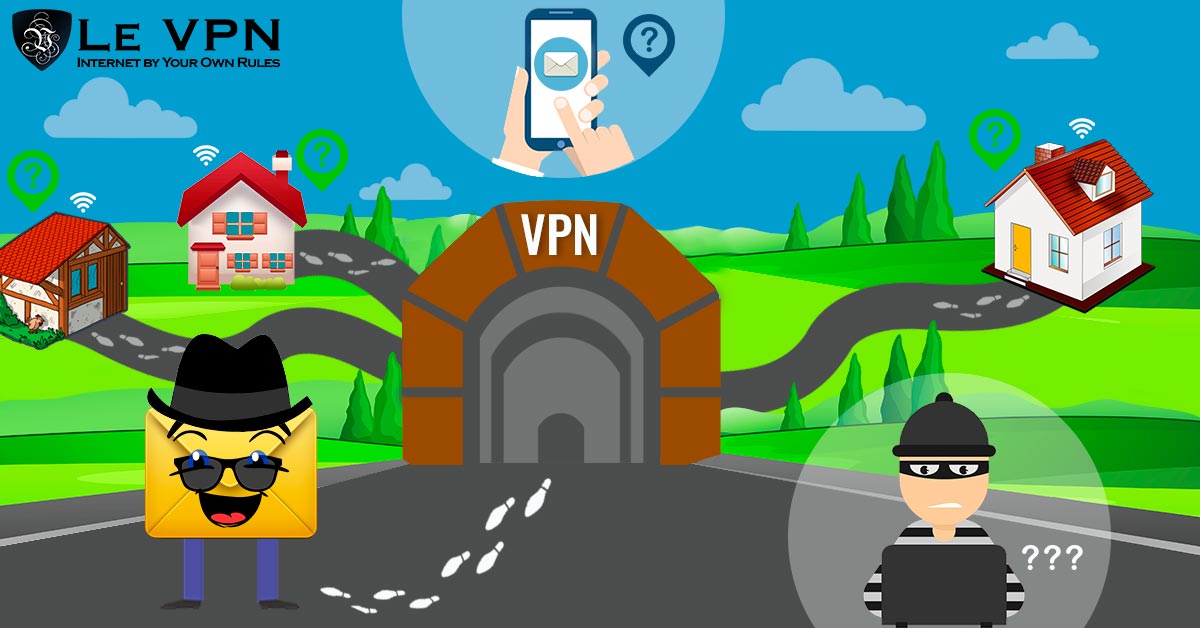
- Connect through a VPN, always. A VPN masks your IP address before you even reach the email provider, hides the connection inside an encrypted tunnel, and keeps your ISP from logging the fact that you visited the service at all. Pay for it with cryptocurrency or a gift card if the subscription itself must not link to you.
The Everyday Version
If you’re less worried about determined adversaries and mostly want a clean address free of spam and profiling, the simplified protocol works fine: use a separate browser or cleared browser profile, sign up with a privacy-focused provider under a handle that isn’t associated with you, skip optional profile details, and use unique credentials stored in a password manager. Add a VPN connection for good measure, and use disposable addresses for one-off website registrations so your new inbox stays quiet.
The Key Ingredient: A VPN
Whatever level of anonymity you’re aiming for, the common thread is the VPN. Without one, your IP address is attached to the account at creation and to every message you send - and any “anonymous” email service that logs IPs can be compelled or breached into revealing it. With one, your traffic is encrypted end to end between your device and the VPN server, and the email provider only ever sees the server’s address.
Le VPN gives you servers in 100+ locations to choose your apparent location, modern encrypted protocols including OpenVPN and WireGuard, apps for all major devices, and up to 10 simultaneous connections per account - with a 30-day money-back guarantee on your first purchase. You can verify your IP is masked at any time on the test-your-IP page. Set it up first, and every account you create afterwards starts anonymous - and stays that way.