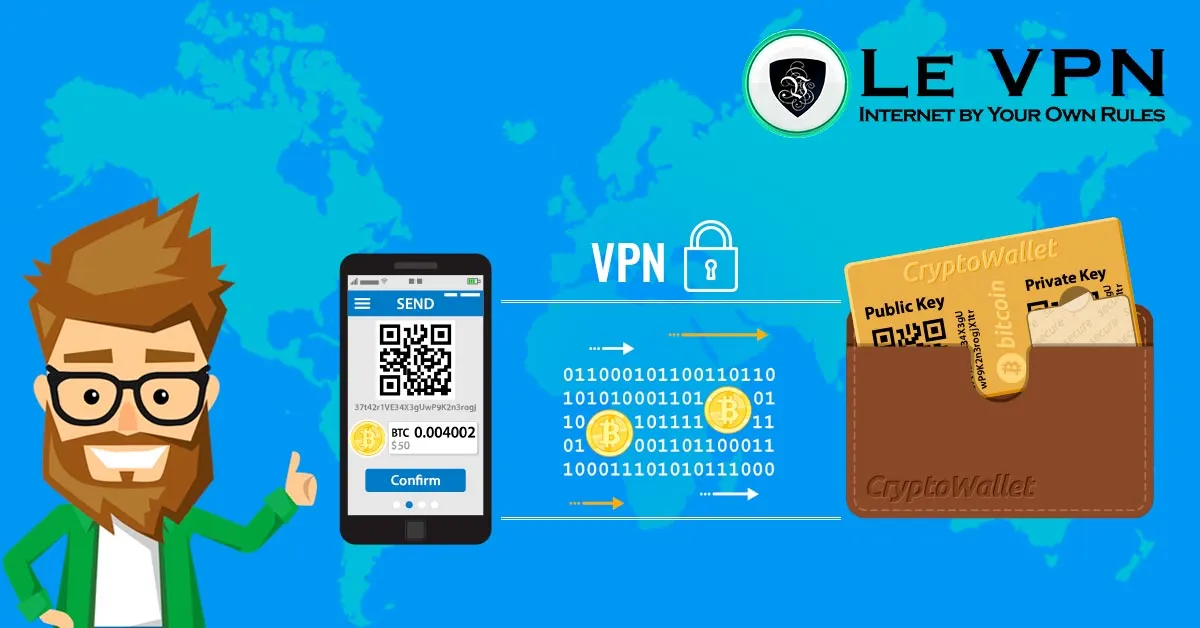
Why you need a reliable VPN for crypto wallet management
The two most frequent questions about cryptocurrency are whether it can be tracked and whether it can be hacked. The honest answer to both is “it depends” - and what it mostly depends on is you. The blockchain itself is remarkably robust; the weak points are the devices, networks, and habits around your wallet. That is exactly where a reliable VPN for crypto wallet management earns its place.
A Cautionary Tale: When the "Free VPN" Is the Attack
One of the most instructive incidents in crypto security didn’t involve breaking a blockchain at all. In 2018, users of the popular wallet interface MyEtherWallet (MEW) lost funds after the free VPN browser extension Hola - which many of them ran alongside their wallet - was compromised for around five hours. MEW’s own infrastructure was never breached. The attackers simply piggybacked on a “security” tool the victims had installed themselves, and that window was enough to identify wallet sessions and drain funds.
Earlier the same year, MEW users were also hit by a DNS hijacking attack that silently redirected them to a fake copy of the site. Two different attacks, one lesson: your crypto is only as safe as the connection and the tools between you and it. Free VPNs - with no security budget, opaque ownership, and a business model built on monetizing users - sit on the wrong side of that lesson. We have written before about why you shouldn’t use a free VPN, and crypto raises the stakes considerably: unlike a fraudulent card charge, a transferred coin cannot be recalled by any bank.
Why Crypto Users Are Prime Targets
Managing cryptocurrency is functionally online banking without the safety nets. That makes wallet holders unusually attractive to attackers, for three reasons:
- Transactions are irreversible. There is no chargeback, no fraud department, no undo. Once funds move, they are gone.
- Value is concentrated and visible. A single phishing success can capture an entire portfolio, and on public blockchains attackers can see which addresses are worth pursuing.
- The attack surface is wide. Exchange logins, wallet extensions, seed phrases, DNS lookups, public Wi-Fi sessions - each is a separate door, and the attacker only needs one left unlocked.
An old saying applies: “if you have something, someone will try to take it from you.” Cynical, but it is the correct axiom to build your security around. Threats aren’t limited to stereotypical hackers, either - surveillance-heavy networks, data-harvesting ISPs, and opportunistic snoops on shared Wi-Fi all gather the information that later enables targeted attacks.
How a VPN Protects Your Crypto Wallet Management
A VPN cannot store your keys or approve your transactions - nor should anything but you. What it does is secure the layer attackers most often exploit: the connection.
- Encryption on every network. With Le VPN active, everything between your device and the VPN server is encrypted with AES-256 over modern protocols (OpenVPN, WireGuard, Stealth WireGuard). Checking your portfolio from a café, airport, or hotel stops being a gamble on the local network's integrity.
- Your IP address stays private. Exchanges, dApps, block explorers, and every website you touch see the VPN server's address, not your home connection. That decouples your trading activity from your physical identity and location - and keeps your IP out of the datasets attackers use for targeting.
- DNS-level threat blocking. Le VPN's apps include Threat Protection, which blocks known malicious and phishing domains at the DNS level - a directly relevant defense, given that fake wallet and exchange sites are the single most common way crypto is stolen.
- Every device covered. One account protects up to 10 simultaneous connections, so the phone with your authenticator app is covered along with the laptop running your wallet.
Layers of Safety: The Full Stack
A VPN is one layer, not the whole fortress. Serious wallet hygiene in 2026 looks like this:
- Keep systems updated - OS, browser, wallet software, and firmware on any hardware wallet.
- Use reputable security software to catch malware and clipboard hijackers (a common trick replaces copied wallet addresses with the attacker's).
- Guard your seed phrase offline. No photos, no cloud notes, no exceptions. Anyone with the phrase owns the funds.
- Enable two-factor authentication on exchanges - app-based, not SMS, which is vulnerable to SIM swapping.
- Verify URLs obsessively and bookmark your exchange and wallet sites rather than clicking links from emails or search ads.
- Connect through a trusted, paid VPN before touching anything wallet-related, especially away from home. General cybersecurity practice and the human factor - recognizing phishing and social engineering - do the rest.
Choose the Reliable Option
The MEW/Hola episode is what “you get what you pay for” looks like in security: people entrusted irreversible money to a free tool, and the free tool became the breach. A reliable VPN for crypto wallet management means a provider with real infrastructure, a subscription business model, and no incentive to monetize your traffic.
Le VPN offers servers in 100+ locations worldwide, modern protocols, DNS-level threat blocking, and up to 10 simultaneous connections - and, fittingly for this audience, accepts most major cryptocurrencies as payment. New subscriptions come with a 30-day money-back guarantee on your first purchase (note that the guarantee does not apply to purchases paid in crypto). Secure the connection layer properly, and your keys, coins, and peace of mind all get easier to keep.
About the author

Guest Author
Vuk Mujović is the founder of MacTíre Consulting, an analyst, data management expert, and a long-term writer on all things business & tech. He authored blogs, articles, and opinion pieces aimed to help both companies and individuals achieve growth without compromising their security.
Articles by Vuk Mujović →