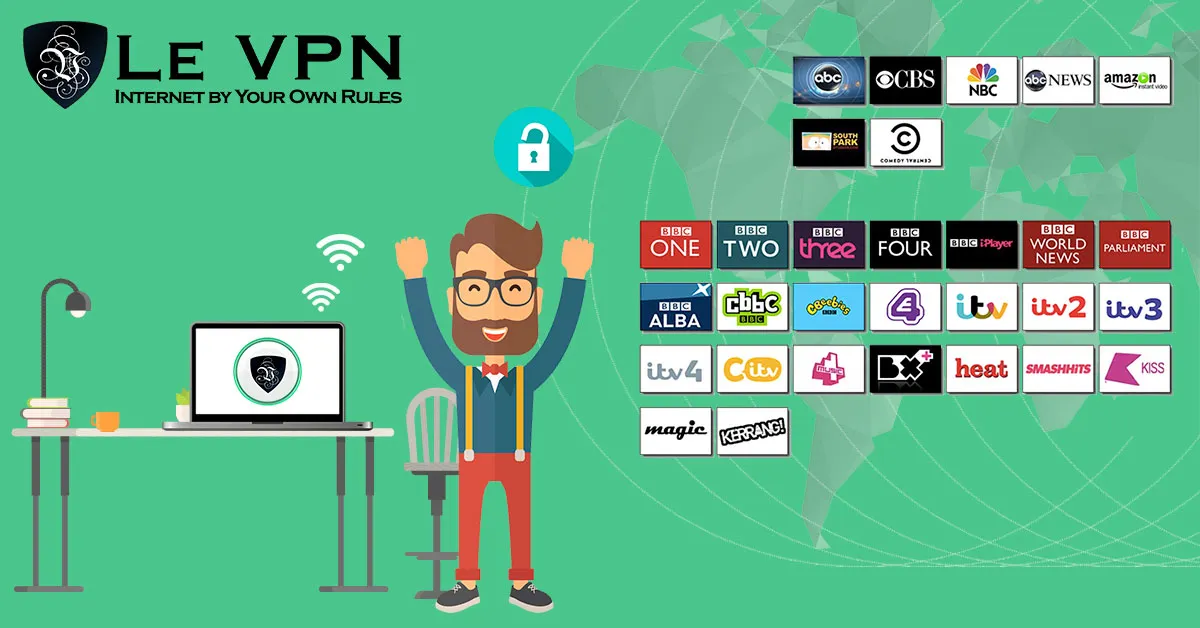
Watch FA Cup Semi-Finals Online Live
The FA Cup is the oldest football competition in the world, and by the time the semi-finals arrive at Wembley each spring, it has usually delivered its full quota of giant-killings, late drama and once-a-generation upsets. For an ardent football lover, the semi-finals are unmissable - two matches, one iconic stadium, and a place in the final at stake.
But football fans travel. If the semi-final weekend catches you abroad on business or holiday, you’ll quickly discover that the broadcasters showing the matches don’t follow you across borders. Here’s how to watch the FA Cup semi-finals online, live, from anywhere.
Why You Can't Just Stream It From Anywhere
FA Cup broadcast rights are sold country by country. In the UK, the matches are shown live on free-to-air and pay-TV channels; other countries have their own licensed broadcasters, and some have none at all. Every one of those online streams checks your IP address before playing. Outside the licensed territory, you get the familiar block message instead of kick-off - even if you’re a paying subscriber back home.
The Solution: Watch The FA Cup With Le VPN
A VPN puts you virtually back inside the right territory. Connect to a Le VPN server in the UK and every website you open sees a British IP address - so UK broadcasters treat you as a viewer at home. Millions of football fans use exactly this approach every season.
The practical steps:
- Buy a Le VPN subscription and install the app on your device - Windows, macOS, iOS and Android are all supported.
- Connect to a UK server. Le VPN offers several, including London, Coventry and Kent, among servers in 100+ locations worldwide (see the full list).
- Open the broadcaster's site or app and stream the match live. You can confirm your virtual location first at the IP test page.
Some useful, field-tested notes for UK streaming: BBC and ITV services work from any UK server. If ITV’s player glitches, switching to the Coventry server usually fixes it. Most UK catch-up platforms ask for a free account with a UK postcode, so set that up before matchday. And if you’re watching from a country where sports or streaming sites are censored entirely, Le VPN’s Stealth WireGuard protocol is built to connect even through networks that block ordinary VPNs.
Fans living in the UK but travelling elsewhere aren’t the only winners here: supporters abroad who subscribe to their own country’s licensed broadcaster can connect to a server back home and keep their subscription working on the road. Whatever your setup, the principle is the same - connect to a server where your broadcaster lives.
Live Streaming You Can Actually Rely On
Nothing ruins a semi-final like buffering in stoppage time. Le VPN’s modern protocols - WireGuard, OpenVPN, Stealth WireGuard and IPSec/IKEv2 - are fast enough that HD streams run as smoothly as on your normal connection, and picking a server geographically close to the broadcaster keeps latency low. One account covers up to 10 simultaneous connections, so the match can play on the laptop while the family’s phones and tablets stay connected.
Secure Streaming, Wherever You Watch
There’s a bonus that outlasts the cup run: everything you stream and browse through Le VPN travels in an encrypted tunnel. On hotel, airport and pub Wi-Fi - where travelling fans do most of their watching - that means your passwords, payments and messages are protected from anyone snooping on the network, and your real location stays private. No malware-riddled “free streaming” sites required, either: you’re watching the legitimate broadcasters, just from the right virtual side of the border.
The FA Cup semi-finals come around every spring, and with a VPN in your kit, geography never again decides whether you see them. Subscribe to Le VPN and take your football everywhere - your first purchase is backed by a 30-day money-back guarantee.
About the author
Le VPN Blog Contributor
Shalini Nagaonkar is a longtime contributor to the Le VPN blog, writing on cyber security, digital privacy, and how to stay safe online. Her articles cover everything from practical VPN use cases to the latest developments in online security.
Articles by Shalini Nagaonkar →