Maileva La Poste Breach: How to Check a Letter Before You Pay
La Poste, the French postal group, confirmed on 14 and 15 November 2026 that data on about 22 million people was taken from Maileva, a service that prints and posts letters for businesses and institutions. The people concerned did not choose Maileva. They received a letter from a landlord, a laboratory, a hospital or an employer that used it.
The data is a name and a postal address. That is enough to send a paper letter that looks genuine.
What happened at Maileva?
Maileva is a brand of Docaposte, the digital subsidiary of La Poste. Businesses upload documents to it, and Maileva prints and posts them: payslips, invoices, registered letters, notices of general meetings. The company claims more than 70,000 users and 180 million documents sent in 2024, figures relayed by Leto.
The timeline, as reported:
- Mid-September 2026: Maileva is hit by what the company calls a "cyberattaque complexe" (a complex cyberattack). IT-Connect reported that an internal document dated 5 October, seen by the site FrenchBreaches, puts the start of the intrusion at 9 September. That date comes from the leaked document and has not been confirmed by La Poste.
- 23 September 2026: Maileva suspends all services after unauthorised attempts to access client accounts and send fraudulent mail. Services return on 29 September. Docaposte then describes a "cybersecurity incident" with unauthorised access attempts. No theft of data is mentioned at that point.
- 14 and 15 November 2026: La Poste confirms the theft publicly on 14 November. The written Docaposte statement is dated 15 November, about two months after the attack.
According to the statement quoted by AFP, the CNIL (the French data protection authority) was notified and a complaint was filed. The Paris prosecutor confirmed on 15 November that an inquiry is open and has been given to the cybercrime brigade of the Paris police, as Next reported.
What was taken, and what was not?
The statement, quoted by Next and Solutions Numériques, says: "22 millions de personnes destinataires d'envois par des entreprises et institutions clientes de Maileva, sont concernées." In English: 22 million people who received mail sent by Maileva's business and institutional clients are concerned.
| Question | What is known | Who says so |
|---|---|---|
| Names and postal addresses | Taken: first name, surname and postal address | La Poste and Docaposte |
| Title or gender | Mentioned in at least one sender notice and in press reporting, not in La Poste's statement | The notice from the Lorient transport network IZILO (title, "civilité"), and IT-Connect's own reporting (gender) |
| Bank details of individuals | Not concerned | La Poste |
| E-mail addresses or phone numbers of recipients | No source says they were exposed | None |
| Contents of letters | Disputed, varies by sender | See below |
On bank data, La Poste's position is that no bank details of individuals were taken. Cryptoast and IT-Connect reported that an internal document, published by the site FrenchBreaches, mentions possible exposure of bank details and invoice amounts belonging to Maileva's corporate clients. La Poste has not confirmed this. It concerns companies, not the people who received letters.
Were the letters themselves read?
La Poste does not say that letters were read and does not deny it. Its statement says the content of the mail "does not belong to Maileva" and is a matter between its clients and their own recipients. It adds that no alteration or destruction of data was found.
Senders have said different things:
- Hôpital Foch (a hospital in Suresnes, near Paris) says payment reminder letters sent between 9 and 23 September 2026 "may have been read", and that these letters do not mention the nature of care or bank details, according to The Connexion. IT-Connect reported that the letters carry invoice numbers, dates of care and amounts due.
- Flandre Opale Habitat, a social landlord, said in a notice dated 3 November that letters from the past ten years may be involved, including invoice amounts. It said it had seen no fraudulent use, as Economie Matin reported.
- An occupational health service in Finistère says the accessed data was mail tracking, with no evidence that documents were viewed or extracted, according to Next.
Am I affected by the Maileva breach?
You cannot check. There is no public search tool. Maileva acts on behalf of its clients, and the statement says it informed all affected client companies in the days after the incident was identified. Telling the people who received letters is the job of each client.
Notices therefore arrive sender by sender. Press reports name notices from the laboratories Novabio and Inovie, the landlords Flandre Opale Habitat and Altéal, Hôpital Foch and the Lorient transport network IZILO. No ministry, tax office or town hall has been named as an affected sender. No figure for the number of people informed has been published. Some people may be told several times, others never.
France has about 68 to 69 million inhabitants, so 22 million is roughly one person in three. That is arithmetic, not a count of people who have been informed.
If you want an answer, ask the organisations that write to you whether they use Maileva and whether your data was involved. Under the GDPR they have one month to reply, which can be extended by two months.
What fake letters should I expect?
A name and an address are enough for a scammer to post a letter that reaches the right person at the right door. If letter contents were seen in some cases, a fake could also quote a real sender or a real amount. According to Economie Matin, a fake reminder that quotes the exact invoice amount is the scenario Hôpital Foch asks its patients to watch for.
The letter knows your name and your address. That does not make it genuine: never act on what the letter itself gives you.
Flandre Opale Habitat said on 3 November that it had seen no fraudulent use, as Economie Matin reported, and no outlet has reported a confirmed fraud linked to the breach as of 23 November 2026. Possible letters include:
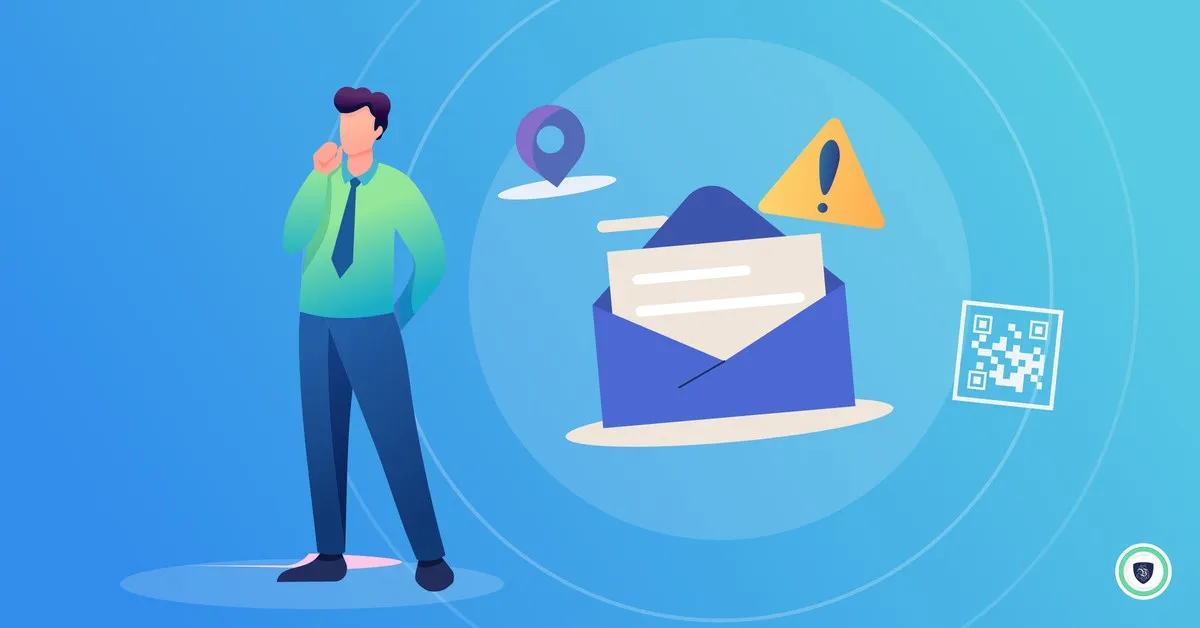
- A payment reminder from a landlord, laboratory or hospital with a QR code "to pay faster".
- A letter announcing that the sender has changed bank and giving a new IBAN for your rent or invoice.
- A fake fine or a fake tax letter with a web address or a QR code.
- A letter asking you to call a number to "confirm your file", or a phone call that quotes your address to sound official.
Paper letters with QR codes already exist in France. A user report on a government feedback site dated 30 September 2026 describes fake postal letters with QR codes and the difficulty of finding where to report them. Reporting services in France are organised around websites, SMS messages and calls, so a paper letter has to be reported piece by piece. The list further down shows which service takes which piece.
The latest national figures cover 2025. In its 2025 activity report, published on 26 March 2026, Cybermalveillance.gouv.fr (the French government's help service for victims of cybercrime) says it assisted more than 500,000 victims, up 20% on 2024. Requests for help after data breaches rose by 107%, phishing rose by 70% and became the first threat for all audiences, and transfer fraud rose by 170%. The same report says data leaks led to burglaries and to visits from fake police officers or gendarmes to licence holders of the Fédération française de Tir (the French shooting federation). Our guide on how to avoid phishing covers the e-mail and SMS versions of the same method.
What should I do when a letter asks for money?
- Use nothing printed on the letter. Not the phone number, the QR code, the web address or the IBAN. Reach the sender through your customer account, your contract or an old genuine letter. The French government's advice is to type the official address of a site yourself.
- Do not scan a QR code on a letter you did not expect. The Ministry of the Economy explains how QR code scams work and advises checking for a sticker placed over the real code.
- Treat a change of bank details as a stop sign. Call the sender on a number you already have. Since October 2025, banks in the euro area must check the payee name on a transfer. Read the result before you confirm.
- Pay a fine only on amendes.gouv.fr, the payment site of ANTAI (the French agency that processes traffic fines), and pay tax only on impots.gouv.fr. Type the address by hand.
- Never give a code received by SMS to someone who calls you, even if they say they are your bank. Hang up and call the number on your bank card. Cybermalveillance.gouv.fr recorded a 159% rise in fake bank adviser fraud in 2025.
- If you are worried about identity theft, you can ask the Banque de France, free of charge, whether you are listed in its payment incident files, FICP and FCC. You can also check FICOBA, the file of bank accounts opened in your name, in your personal space on impots.gouv.fr under "Autres services", as the CNIL explains.
The same habits apply to other common tricks, which we list in common internet scams.
Where do I report a fake letter in France?
There is no single service for a fake paper letter. Report each part of it to the service that handles it:
- Your bank, first, if money has left your account.
- 17Cyber: online diagnosis and help, run by the Police, the Gendarmerie and Cybermalveillance.gouv.fr.
- Pharos: to report a fraudulent website, for example the page a QR code led to.
- 33700: forward suspicious SMS messages to this number. If a call asked you to ring back a premium-rate number, text that number to 33700. Arcep, the telecoms regulator, explains how.
- THESEE: the online complaint service for internet scams, described on impots.gouv.fr.
- The CNIL: if an organisation does not answer your GDPR access request within the deadline.
Keep the letter and its envelope. They are your evidence.
What is still unknown?
As of 23 November 2026:
- Who did it. No group has claimed the attack, and no ransom demand or sale of the data has been reported.
- How. The method has not been disclosed officially.
- Whether letter contents were read, and for which senders.
- How many people have been informed.
- What the regulator will say. The CNIL was notified but has published no statement on the case.
The Data Breach Scanner in the Le VPN apps checks the e-mail address of your Le VPN account against known data breaches. This breach concerned postal addresses, so it will not show this one.
For another recent case where the question was what scammers can do with stolen personal details, see our article on the TfL Oyster photocard breach.
About the author
Le VPN News Desk
The Le VPN Research Team is the news desk of the Le VPN blog. It tracks internet shutdowns, censorship, new privacy laws, and cybersecurity incidents as they unfold, and turns them into clear, sourced reporting. Every article is built from primary sources, fact-checked against them, and reviewed under Le VPN's editorial rules before it is published.
Articles by Le VPN Research Team →