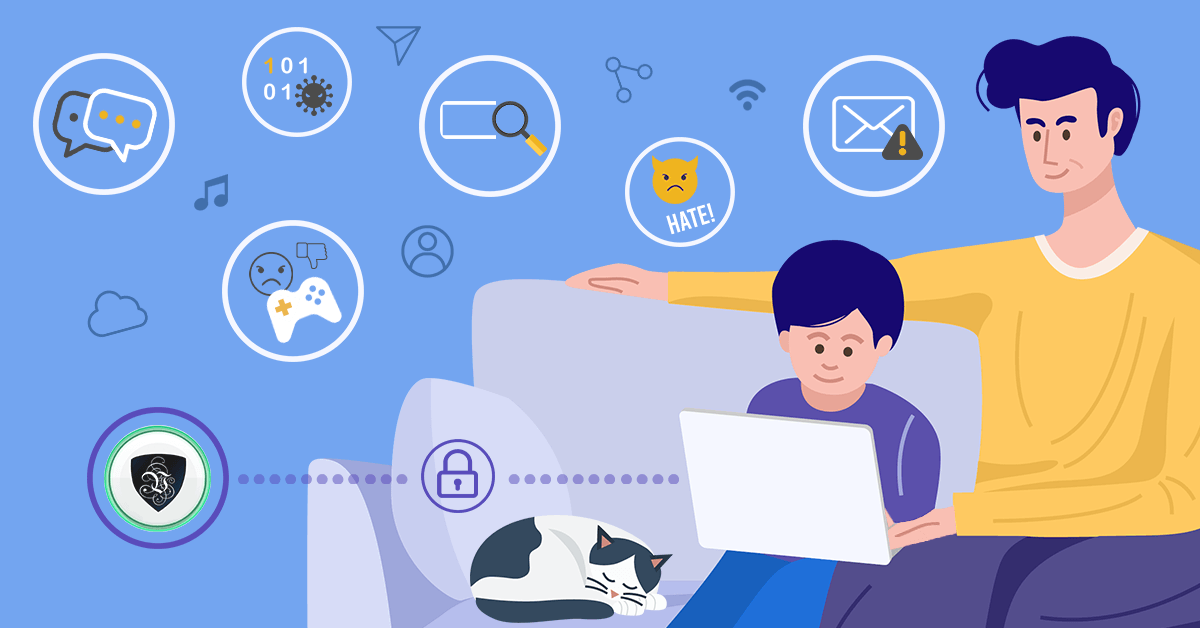
7 Tips for Kids Safety Online
The safety, security, and well-being of children on the internet became a concern the moment kids were first able to go online - and it has only grown as tablets, phones, and games became a standard part of childhood. Thankfully, kids safety online is much easier to achieve than it seems, if we remember two things: children are far more reasonable than they appear to us as parents, and they will actually use the tools and habits we take the time to explain.
When it comes to parenting, prevention is essential. Good children’s cybersecurity protects kids both from the dangers they can see and from the ones they’d never notice on their own.
The approach that works is layered: technical tools handle the outside threats, and honest conversation handles the rest. With a provider like Le VPN protecting every family device - one account covers up to 10 simultaneous connections - the external attacks are largely covered, leaving you free to focus on the human side with the seven tips below.
What is Kids Safety Online?
To protect children online, it helps to understand why they’re at particular risk. Kids are not less intelligent than adults - sometimes quite the opposite. But their brains are still developing: the capacity to weigh far-reaching consequences matures gradually, well into a person’s early twenties, and children are more emotionally susceptible to manipulation, flattery, and pressure than they realize.
None of this is a flaw - it’s normal human development. But it’s exactly what scammers, groomers, and bullies exploit, and it’s why children face greater risk from online harassment and cyberbullying than adults facing the same platforms.
7 Tips for Kids Safety Online:
#1 Operate from a Safe Environment: Automatically Connect Through a VPN
A house is built from the ground up, and your child deserves a foundation that doesn’t drop them straight into the internet’s dangers.
Technically, that means their devices always connect through a VPN - encrypting their traffic on every network, including school and friends’ Wi-Fi - and that they don’t start out with unrestricted access to every app and feature on a new phone or computer. Age-appropriate limits, added openly rather than secretly, are part of a safe start.
Psychologically, it means you calmly and openly discuss what happens online. If your child brings something to you - however awkward - don’t run away from the conversation. Every subject is allowed the moment they’ve found it online; better they process it with you than with strangers.
#2 Cyber Hygiene from an Early Age: Set Some Rules Together
Cyber hygiene - the everyday habits of staying private and secure - is one of the most valuable things you can teach, and one of the best uses for a VPN connection.
For a kid, this can genuinely be a game. Make choosing a pseudonym and avatar a fun project: help them pick a gamer tag they’ll use for everything online that isn’t school-related, and explain why their real name, school, and address stay off the internet. Rules you create together get followed; rules imposed from above get circumvented.
#3 Introduce Them to Social Media Yourself
Social platforms are among the most dangerous apps children use, and there is no realistic way to keep kids off them forever - their entire social world will eventually live there.
The better approach is to guide them in on your terms, ideally before peer pressure does it for you. Walk through privacy settings together, explain how recommendation algorithms and strangers’ DMs work, and start with relatively tamer, interest-based communities where they can observe before performing. The goal is a child who understands the machine before trying to launch their TikTok or Instagram career at age 8.
#4 Play Along: Teach Responsible Gaming and Prevent In-Game Abuse
If you weren’t a gamer before, parenthood is a good reason to become one. You won’t avoid gaming, so help your child learn to game - and behave in-game - responsibly.
Instead of being the dad who deleted his son’s Minecraft world, be the one building it alongside your child. Playing together teaches them how to handle in-game abuse and griefing with you there to model the response - and it’s an unmatched window into what’s happening in their life when you’re not around.
#5 Establish Open Discussions: Google It Together
Don’t lie, and don’t claim you don’t know - any question your child has, you can find out together.
Some questions will be uncomfortable, especially as they grow, but face them head-on. Santa Claus might not be a person, but that doesn’t make him unreal - he’s a symbol of the season and of giving. Children are more open to abstract thinking than we assume; don’t be afraid to dabble in a bit of philosophy together. A child who knows every question gets an honest answer at home won’t need to seek answers from strangers.
#6 Live and Let Live: Explain Online Harassment
Explain everything about online harassment - what it looks like and how it happens.
This is not only so your child won’t be a victim, but so they won’t become a harasser out of ignorance of the effect. Teach them the two-part response: disregard the dumb, report the aggressive - calmly and without drama. And make sure they know that if something online scares them, telling you will never get their device taken away; that single assurance keeps the communication channel open when it matters most.
#7 No Free Lunch: Prepare Them to Avoid Common Traps
This tip pairs naturally with teaching the value of money and work. Kids safety online is much easier when children internalize that nobody gives away free stuff for nothing.
Free V-Bucks, Robux generators, and rare-skin giveaways are the new candy from a white van - treat them exactly that way. A child who reflexively asks “what do they get out of it?” is already immune to most scams, phishing links, and malware bait aimed at kids.
Conclusion
You can’t prevent your child from going online to play and connect with friends - nor should you. Approach the issue reasonably and guide your child through cyberspace the same way you guide them through life.
Let software handle the technical layer: Le VPN encrypts every family device’s connection with servers in 100+ locations, up to 10 simultaneous connections, and a 30-day money-back guarantee on your first purchase. And let these seven tips handle the human layer - because protecting the device is the easy half; these conversations protect the child.