Fake Shops Before Black Friday 2026: How to Check a Store Before You Pay
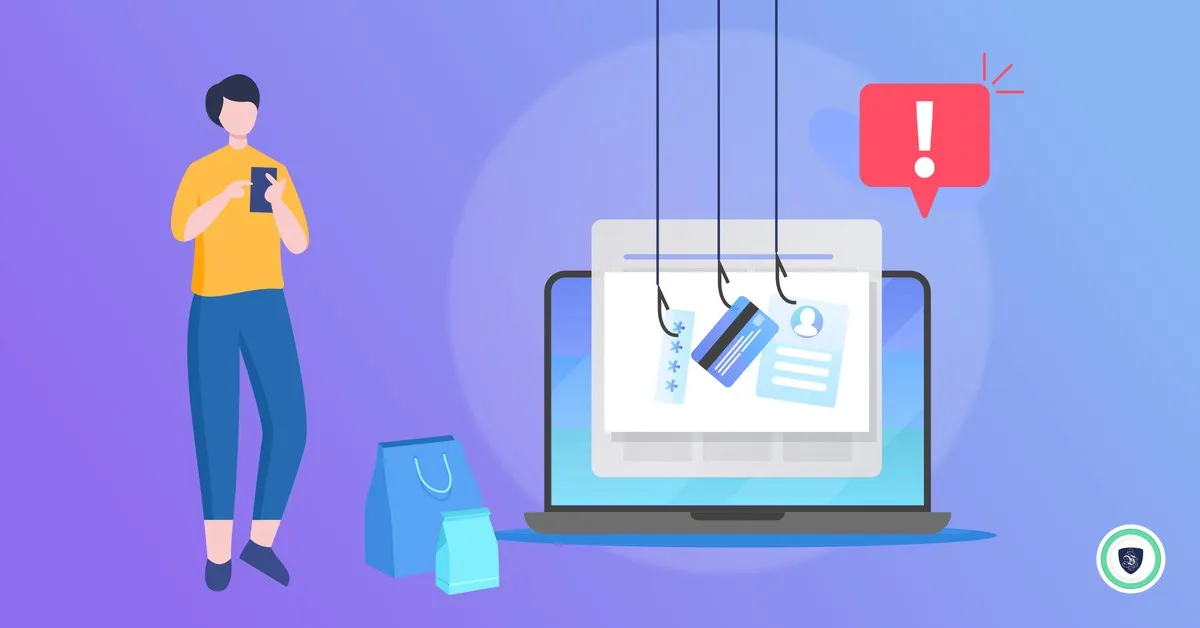
A fake shop looks like any ordinary online store, right up until you pay. After that, the goods never show up, and the card number, address and e-mail you entered now belong to someone else.
Black Friday falls on 27 November this year and Cyber Monday on 30 November, and the numbers published ahead of it point one way. Norton's Holiday Report 2026 found that nearly 1 in 6 US adults (16%) say they have been scammed while holiday shopping online. That figure covers any past season, not just this one, and it comes from a survey of 1,000 US adults run in September 2026. Among shopping scam victims, 88% lost money, with an average loss of $394, and 47% of victims say they were scammed on a social platform.
The same release carries a second kind of number, drawn from the security telemetry of Norton's parent company Gen rather than from the survey. Gen saw fake shop activity up 129% compared with the start of last year's holiday season, and says it blocked nearly 25 million attempted visits to fraudulent shopping sites in the last month alone. The release gives no country breakdown for either figure.
Two other sources fill in the picture. The Scamwise 2026 Holiday Shopping Scam Report says a scam store it has not seen before is reported every three minutes, about 500 a day. These are sites submitted by users to a commercial scam checker between March and October 2026, so the sample is self-selected and has no stated geography. And in March 2026, researchers at Malwarebytes mapped a single operation of more than 20,000 fake shop domains, all resolving to just 36 IP addresses.
Why fake shops peak around Black Friday
The first reason is the route shoppers take to reach a store. The US Federal Trade Commission warns about ads for brand-name products at unusually low prices. Scamwise traced at least 1 in 5 of the fake stores reported to it back to an ad on a major platform, with Google and Meta leading. Malwarebytes, drawing on its own telemetry, found that fake shops accounted for 65% of the threats it blocked on social media and named Facebook and YouTube as the main launchpads.
The second reason is cost. Setting up a convincing store takes little money. The network Malwarebytes mapped ran on a handful of templates with cosmetic changes, copied across thousands of domains. The addresses often imitate a known brand with a small misspelling, which the German consumer advice centres list as a warning sign. Supply rises with the season as well: Scamwise says the number of holiday scam sites reported to it grew fivefold between August and October.
The third is the shopper's own state of mind. Sale week makes steep discounts look ordinary, and in Norton's survey 65% of respondents said they would buy from a website they had never heard of if the price was right. A countdown timer on the page pushes in the same direction.
The two-minute store check before you pay
These checks need no special tools, and a single failed check is reason enough to buy somewhere else.
- Ask how you got there. If the answer is an ad, a message or an e-mail, close the tab and search for the merchant yourself. The UK's National Cyber Security Centre advises typing a shop's known address yourself and not using links in unexpected messages.
- Read the address letter by letter. Spain's INCIBE warns about addresses that differ from the real one by a single letter, and Germany's BSI points to endings such as ".de.com". An unfamiliar ending on what claims to be a big-brand shop is a reason to check further. The padlock proves nothing: the BSI says HTTPS is not enough, because fake shops have it too.
- Search the shop's name with "scam", "review" or "complaint". This is the FTC's advice, and France's Cybermalveillance.gouv.fr recommends the same search with "arnaque". Read reviews somewhere other than the shop itself. The European Consumer Centre in the Netherlands says not to rely solely on the reviews on the shop's own site.
- Check how old the domain is. Enter it in ICANN Lookup, which shows registration data including the creation date. Some country endings, such as .de, .fr or .es, may not appear there, and the registry for that ending has its own lookup. Domain age is a practical test rather than an official rule. A domain created a few days ago that sells big-brand goods at a deep discount is a strong warning.
- Find the company behind the shop. A French shop must show its terms of sale and legal notice, and Cybermalveillance says to be wary if they are missing from the footer. The BSI asks for a complete legal notice and suggests checking that the firm exists at the address given. Its Black Friday newsletter of 4 November 2026 notes that a fake shop may show a real address where the company cannot be reached. So look the name up in the trade register of the shop's country, such as Companies House in the UK or the Handelsregister in Germany. Readers in Germany can also enter the shop's address in the Verbraucherzentrale's Fakeshop-Finder, which answers with a traffic light: green for a verified shop, yellow for unclear, red for one already reported as fake.
- Compare the price with a retailer you know. Prices do vary between shoppers and countries, as our record of documented dynamic pricing cases shows, but not by that much. Cybermalveillance gives the example of high-tech goods sold at 10% of their original value.
- Go to the payment page before you type anything. The BSI describes fake shops that advertise several payment methods and then, at the final step, accept only payment in advance by bank transfer. If the card option disappears at checkout, leave. Treat trust seals the same way: the BSI newsletter warns about logos that cannot be clicked, or that are simply invented.
Pay in a way you can reverse
The official guidance points the same way in every country covered here. Pay by card, and do not send a bank transfer to a shop you have never dealt with.
The FTC says paying by credit card best protects you and your money, since you can dispute the charge. In the US, the dispute letter has to reach the card company within 60 days of the first bill showing the error. The FTC also warns that a seller who demands gift cards, a wire transfer, a payment app or cryptocurrency is probably running a scam.
In the UK, the NCSC notes that credit cards often bring protection under the Consumer Credit Act. Debit cards offer less, though you may recover the money through chargeback. Its advice on transfers is blunt: "Never pay by direct bank transfer." Citizens Advice gives the detail. Section 75 covers credit card purchases of more than £100 but less than £30,000, and chargeback applies to a debit card payment of any amount.
In Germany, the Verbraucherzentrale says advance payment carries the greatest risk for the buyer, and that direct debits can be reversed for up to eight weeks. The European Consumer Centre Germany tells shoppers to be careful whenever a shop asks for advance payment by bank transfer or money transfer service. The Dutch centre recommends a credit card or PayPal for the purchase protection.
The network you shop on is a separate question. If you are buying from a hotel or café, read our piece on the risks of public Wi-Fi in 2026 first.
If you have already paid
The order matters, because the first step has a clock on it.
- Contact your bank or card provider now. With a credit card, ask the card company for a chargeback. With a bank transfer, call the bank at once: the European Consumer Centre Germany warns that money which has reached the recipient cannot be reversed. In the UK, Citizens Advice's current guidance says a bank must refund a bank transfer scam up to £85,000 unless you were grossly careless, provided you report it within 13 months of the last payment. The FTC lists who to contact for each payment method, including gift cards (the issuer, and keep the card and receipt) and crypto, where recovery is hard.
- Keep the evidence. The BSI's advice is to keep all e-mails, invoices and order confirmations.
- Report it. The official routes are in the table below.
- Change your passwords. If you created an account on the shop, change that password everywhere else you used it. Malwarebytes found that these shops harvest payment credentials, billing addresses and personal details, which are then resold or used for identity fraud.
- Expect follow-up. Watch your bank account for several weeks, as the BSI advises, and be suspicious of messages that refer to your order. The FTC has a standing alert about scammers who say they can help people recover lost money. European Consumer Centres have also warned that fraudsters pose as ECC-Net to offer fund recovery. The centres never ask for money.
| Where you are | Where to report |
|---|---|
| United States | The FTC at ReportFraud.ftc.gov. |
| United Kingdom | Report Fraud, the service that replaced Action Fraud, for England, Wales and Northern Ireland. Police Scotland in Scotland. Both are named in the NCSC guidance. |
| France | A purchase you made on a fake site is a scam, and service-public.gouv.fr describes the route as an online complaint through THESEE or a visit to a police or gendarmerie station. Report the site on SignalConso as well. Perceval is for card purchases you did not make yourself. |
| Germany | The police Onlinewache of your Land. |
| Spain | The police, then your bank with the police report in hand, and the Banco de España if the bank refuses. INCIBE's helpline answers on 017. |
| EU, shop in another country | The European Consumer Centres help with disputes with a trader in another EU country, Iceland or Norway. If the shop vanished after you paid, the Dutch centre says that is fraud and a matter for the police. |
One more step applies to Le VPN customers. The Data Breach Scanner checks your account e-mail address once a day against leaked credential databases and e-mails you when the address turns up in a new breach, with a report on what was exposed and what to do. Its scope is narrow. It checks that one e-mail address, it does not watch card numbers, and it does not detect fake shops. But if the address you gave a fake shop shows up in a later leak, the scanner will flag it.
What Threat Protection does for shoppers, and what it does not
Le VPN's apps include a feature called Threat Protection. It works at the DNS level and blocks known phishing and malware sites before they load. The word that matters is "known". A domain has to be on a blocklist before it can be blocked. Fake shops are short-lived (Scamwise found 7 in 10 gone 90 days after being reported), many are replaced by new domains, and a shop registered last week may not be on any list yet. It is one more layer behind the store check, not a substitute for it.
The switch is on by default in the Mac, Windows and Apple Vision Pro apps and off on a new install on the iPhone and Android, so it is worth checking in the app's settings.
Before you click "buy"
The seven checks above take a couple of minutes, and the payment page is the one never to skip. If you still pay the wrong shop, the first call goes to your bank, and it goes better when you paid by card.
About the author
Le VPN News Desk
The Le VPN Research Team is the news desk of the Le VPN blog. It tracks internet shutdowns, censorship, new privacy laws, and cybersecurity incidents as they unfold, and turns them into clear, sourced reporting. Every article is built from primary sources, fact-checked against them, and reviewed under Le VPN's editorial rules before it is published.
Articles by Le VPN Research Team →