Where is Facebook and Twitter Blocked? How to Unblock Twitter and Other Social Media
Social media feels universal - until you land in a country where it simply does not load. Billions of people use Facebook, Twitter (now known as X), Instagram and YouTube every day, yet in a significant part of the world those platforms are blocked, throttled or switched off at politically sensitive moments. If you are travelling, working abroad or living in one of these countries, knowing where social media is blocked - and how to unblock it - is essential preparation.
Where are Facebook and Twitter blocked?
The list shifts over time, but several patterns are stable:
- China has blocked Facebook, Twitter/X and YouTube since 2009, when riots in Xinjiang triggered a full clampdown. The Great Firewall filters China's internet comprehensively, and Instagram and most Western messaging apps are blocked too.
- North Korea is the extreme case: ordinary citizens have no access to the global internet at all, only a closed national network of pre-approved sites.
- Iran blocks Facebook, Twitter/X, YouTube and, in recent years, Instagram and WhatsApp as well - with restrictions tightening further during protests.
- Russia blocked Facebook and Instagram in 2022 and restricts X, part of a broader wave of censorship that has also swept up independent news sites and many VPN providers' websites.
- Turkmenistan and Myanmar heavily restrict social platforms, with Myanmar's blocks expanding sharply after the 2021 coup.
- Episodic blockers: a longer list of countries - Turkey, Pakistan, Ethiopia, Vietnam and others - have blocked or throttled social media temporarily around elections, protests, exams or unrest. Turkey's shutdowns are well documented: platforms became unusable on the main landline and mobile providers during blackouts, with connections throttled to the point of uselessness. These blocks can appear overnight, with no warning.
In other words: permanent bans in a handful of states, and sudden temporary ones in many more. Either can catch a traveller off guard.
How do these blocks actually work?
Governments order internet providers to enforce the restrictions. The techniques range from simple DNS blocking (your device cannot find the platform’s address) to IP blocking and deep packet inspection (DPI), which examines traffic in transit and drops anything that looks like a banned service. Throttling - slowing a platform until it is unusable, while technically not “blocking” it - has become a favourite tool because it is deniable.
What all these methods share is the enforcement point: the network you are connecting through. Which is why the counter-measure works so well.
How to unblock Twitter, Facebook and other social media with a VPN
A VPN (virtual private network) wraps your traffic in an encrypted tunnel to a server in another country. The local network can no longer see which services you are using - only an encrypted stream - and the platforms you visit see the VPN server’s IP address, not your censored location. Connect to a server in a country with a free internet, and Facebook, X, Instagram and YouTube load as normal.
With Le VPN:
- Set up before you travel. This is critical: in countries that block social media, VPN providers' websites are usually blocked too. Create your account and install the apps while your internet is still unrestricted. Sign up on the plans page - first purchases carry a 30-day money-back guarantee.
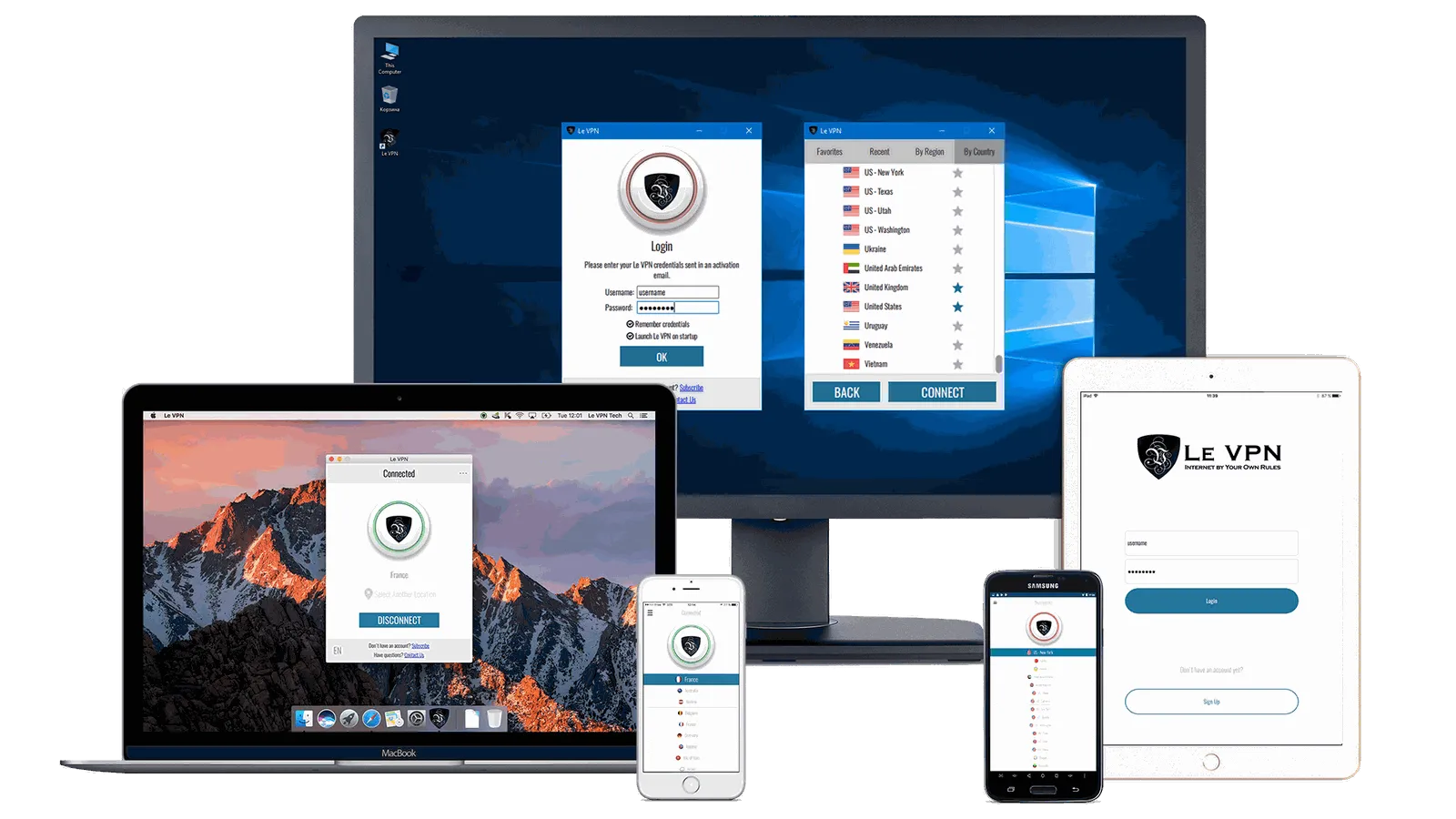
- Install Le VPN on every device - Windows, macOS, iOS and Android, with up to 10 simultaneous connections on one account.
- Use Stealth WireGuard where censorship is heavy. Standard VPN protocols can themselves be detected and blocked by DPI in countries like China, Russia, Iran and Myanmar. Le VPN's Stealth WireGuard protocol obfuscates VPN traffic specifically so it can connect through these restrictions. Elsewhere, WireGuard or OpenVPN are excellent everyday choices.
- Connect to a free country - any of Le VPN's servers in 100+ locations across the Americas, Europe, the Middle East, Asia-Pacific and Africa will do; pick one close to you for the best speeds. See the server list.
- Open your social apps and post, scroll and message as usual. You can confirm your new virtual location on the IP test page.
A few words of practical advice
Have a plan B. Censorship escalates and recedes. If a server stops working, switch locations; if a protocol is blocked, switch to Stealth WireGuard. Between 100+ locations and four protocols, there is almost always a working combination.
Remember the privacy bonus. On any monitored network - state-censored or just public hotel Wi-Fi - the VPN's encryption stops the operator logging which sites you visit and protects your logins and messages in transit.
Know the local rules. Laws on VPN use vary by country; inform yourself before you travel.
Social media is how we keep in touch with family, follow breaking news and stay part of our communities. A border should not switch that off. Sign up to Le VPN today - a few minutes of preparation now means Facebook unblocked, Twitter unblocked and the whole open internet in your pocket, wherever you land.
About the author
Le VPN Blog Contributor
Julie Perrin writes for the Le VPN blog on online privacy, security, and the practical side of using a VPN day to day. Her articles help readers make sense of digital security topics and get the most out of their VPN connection.
Articles by Julie Perrin →