What is a VPN? Why use a VPN service?
What is a VPN, and why would you pay for one? It's the first question everyone asks before subscribing, so let's answer it properly - no jargon, no scare tactics.
What is a VPN?
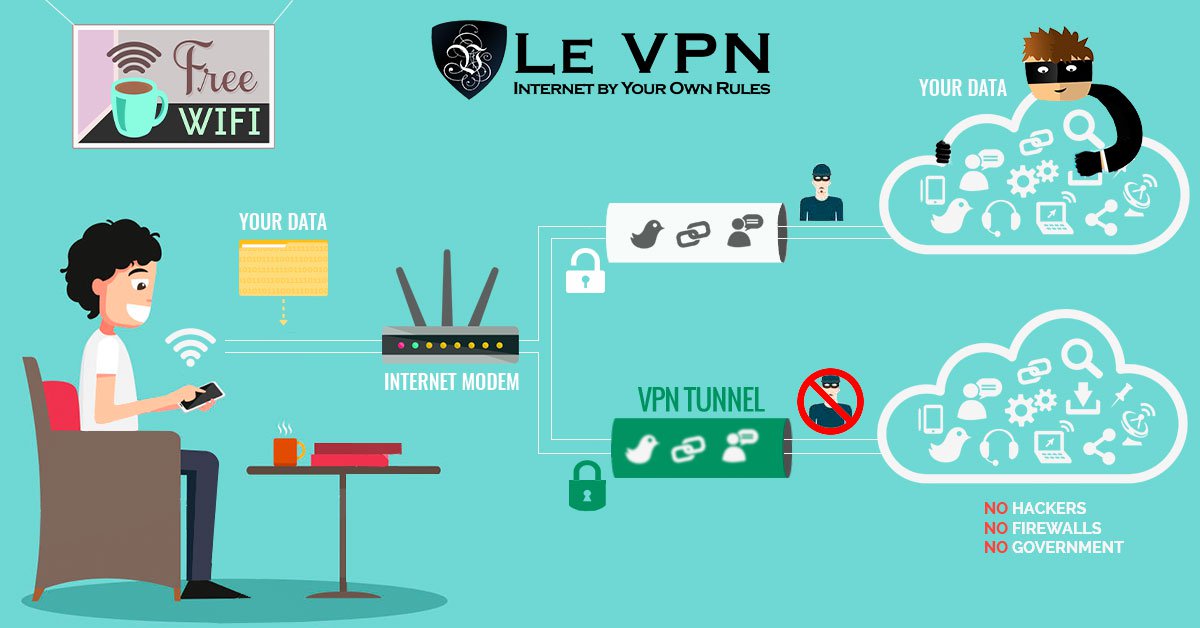
A VPN, or virtual private network, is a service that creates an encrypted tunnel between your device and a server operated by the VPN provider. All your internet traffic travels through that tunnel first, and only then continues on to the websites and apps you use.
Two important things happen as a result:
- Your traffic is encrypted. Anyone sitting between you and the VPN server - the owner of the coffee-shop Wi-Fi, your internet provider, a snoop on the hotel network - sees only scrambled data. They can tell you're online, but not what you're doing.
- Your IP address is replaced. Websites see the VPN server's address and location instead of yours. To the internet, you appear to be wherever the server is - which can be any of Le VPN's 100+ locations across the Americas, Europe, the Middle East, Asia-Pacific and Africa.
You can see the effect for yourself: check the test your IP page before and after connecting.
Why use a VPN service?
1. Security on public Wi-Fi
Open networks in cafés, airports, hotels and trains are convenient - and notoriously easy to eavesdrop on. With a VPN, everything you send and receive is encrypted before it leaves your device, so a hostile network can't capture your logins, messages, or payment sessions.
2. Privacy from your internet provider
Without a VPN, your ISP sees every site you visit and can log, profile, or in some countries sell that history. Inside the tunnel, your browsing is your own business. It also means your provider can't selectively slow down ("throttle") particular kinds of traffic, like video streaming, because it can no longer tell what your traffic is.
3. Access to content across borders
Many websites and streaming services decide what to show you based on your IP address. When you travel, the services you use at home may suddenly claim they're unavailable. Connect to a VPN server in your home country and they see a familiar local address again. The same trick lets you reach sites that are blocked or censored where you happen to be. (Note that streaming platforms do actively detect VPNs - if one server is blocked, switching to another in the same country usually helps.)
4. Safer everyday browsing
Advertisers and data brokers use your IP address as one of the anchors for tracking you across the web. Rotating it through a VPN server, shared with many other users, makes that profile far harder to build.
What a VPN is not
Honesty matters: a VPN is not an invisibility cloak. It doesn't make you immune to malware, it doesn't stop you from typing your password into a phishing site, and it doesn't replace good judgment. It's one strong layer in your security stack - alongside up-to-date software, unique passwords, and two-factor authentication.
Why Le VPN?
- Servers in 100+ locations worldwide.
- Modern protocols: WireGuard, OpenVPN, IPSec/IKEv2 - plus Stealth WireGuard, which disguises VPN traffic to work even in countries that actively block VPNs.
- Up to 10 simultaneous connections, with easy apps for Windows, macOS, iOS and Android.
- A 30-day money-back guarantee on your first purchase, so trying it is risk-free.
Prefer to watch instead of read? This short video presentation of the Le VPN service explains the essentials:
https://www.youtube.com/watch?v=scGon67W8QE
Ready to browse on your own terms? Get Le VPN and switch it on in minutes.
About the author
Le VPN Blog Editor
Alan Summers has been writing and editing for the Le VPN blog for years, covering online privacy, cyber security, and the best ways to get the most out of a VPN. He keeps a close eye on the news that affects internet freedom around the world and turns it into practical advice for Le VPN readers.
Articles by Alan Summers →