Why Use a VPN Hotspot App? Top 10 Facts about Home & Public WiFi Security
Top 10 Must-Know Facts about Home and Public WiFi Security
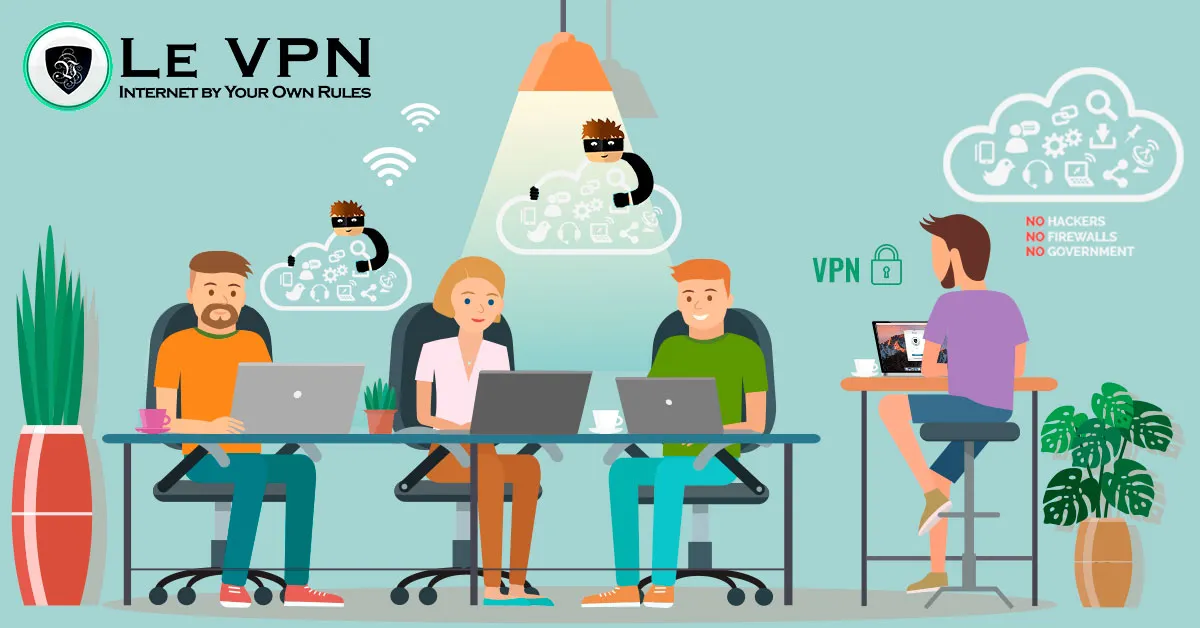
It is very comfortable setting up in your favorite café, ordering a nice hot cup of goodness and starting your work. As more and more people are working remotely, this has become quite a regular site in most urban environments. Not everything is good though, as the hotspot you are connecting is the same as the one everyone else is connecting, a public hotspot. A mecca for the modern digital nomad, but also for the modern data hacker.Using a hotspot is always risky, even if it’s your local ‘’mom’n’pap” coffee shop and not a huge chain. The simple reason is that every user has a connection to the router, meaning that those with enough know-how will easily infect the router, giving them the opportunity to collect all the data going through that spot. This data includes both your browser history, as well as your personal information, passwords, and other sensitive info. Having a good VPN hotspot app is an easy way to circumvent most if not all of these dangers, as a simple hotspot app from a good developer can shield you in just a few seconds, creating an encrypted VPN tunnel between you and whatever you want to see on the internet.
A good VPN provider is the one that offers a full service for all of your devices, no matter the platform. Companies like Le VPN have user-friendly VPN apps that can be installed on Windows, iOS, Android, Mac, and quite a few others. One definition before we start: a “VPN hotspot app” is a VPN app you keep on while connected to hotspots. It protects the device it runs on, and as you will see below, only that device.
What is a Hotspot?
A hotspot, when speaking about technology, is referred to any place where multiple users are connecting to the internet over the same router. This router can take many forms, and while it is usually a WiFi that is connected to a solid cable connection, more and more often we can see mobile hotspots that are connected to mobile data, sometimes in the form of smartphones themselves.While there are hotspot providers that are mindful about cybersecurity and wish to protect their customers by installing a VPN WiFi router in the first place, most people see their hotspot as a secondary service and more of an amenity, leaving it in its very basic form. Sharing your own phone’s hotspot with your friends is usually better than an open free network, because you set the password and you decide who joins. Just know what it does not do: the VPN app on your phone protects your phone’s traffic, not theirs. Each of their devices still needs its own protection, and a 2026 CCS Insight survey found 44% of UK consumers already use their phone as a hotspot, so this detail matters to a lot of people.
Mobile Hotspots
Depending on your mobile data plan, this might not be the cheapest option you can have, but a mobile hotspot is definitely safer than any free WiFi you can find on the street. As previously mentioned, WiFi security is more accessible to apply when you have full control of the router, which is, in this case, your phone: you choose the password, the WPA encryption does its job, and strangers stay off the network. Keep your own premium VPN running on the phone for the phone's own traffic, and connect the phone to a charger while it serves as a hotspot, as this option is known to use a fairly large amount of power.What the phone’s VPN does not do is extend to the devices connected to the hotspot. That is worth its own section, because almost everyone assumes the opposite.
Does Your Phone's VPN Cover Devices on Its Hotspot?
No. On every mainstream operating system, traffic from hotspot or tethering clients bypasses the VPN running on the device that shares the connection. This is not a bug in any VPN app, and no app can fix it; it is how the systems are built.| You share from | Do hotspot clients get the VPN? | The detail |
|---|---|---|
| Android phone | No | Google's own Pixel VPN documentation lists tethering traffic, USB and Wi-Fi hotspot included, under data the VPN does not protect, and the Google Fi version says a hotspot client does not use the VPN "unless you separately use a VPN on that device". No setting on stock Android changes this; the only workarounds require root. |
| iPhone or iPad | No | Personal Hotspot has no options for this, and Apple's own engineers have said on the developer forums that no supported way exists to force hotspot traffic through the VPN. |
| Windows PC | Not by default | Mobile Hotspot shares your underlying connection, not the tunnel. The working route: in the VPN adapter's properties, on the Sharing tab, allow other users to connect through it and pick the hotspot adapter. Protocol and adapter dependent, but this is the one semi-supported path on any mainstream system. |
| Mac | No | Internet Sharing cannot share a VPN interface; Apple's sharing guide never offers one as a source. Community workarounds exist, all of them manual firewall surgery, none supported. |
The technical reason is the same everywhere: a VPN app routes the traffic of the device’s own applications, while tethered traffic is forwarded between the hotspot and the modem below the app layer. On Android that forwarding can even happen directly in hardware, bypassing the processor the VPN runs on.
So what actually works when you want several devices behind a VPN at once? Three options work. First, each device runs its own VPN app, which Google’s documentation itself points to; a Le VPN subscription covers up to 10 simultaneous connections, so a family’s worth of laptops and phones fits in one plan. Second, run the VPN on a Wi-Fi router, at home or a portable travel router on the road: the router counts as a single connection slot and everything that joins its network is protected, including devices that cannot run VPN apps at all. GL.iNet’s documentation states it plainly: once the router’s VPN client is active, all clients connected to the router use the VPN. Third, on Windows only, the adapter-sharing route in the table above.
What is a Good Hotspot App?
A good WiFi hotspot app is the one that is more focused on providing you with WiFi security and stability than just connecting you to any free hotspot that you can find. The best hotspot apps are those that come with a VPN connection. You can use WiFi VPN free if you have a subscription for a premium VPN provider such as Le VPN, and it is best of all of your devices are connected to a VPN at all times.
Home WiFi vs. Company WiFi vs. Public WiFi
Most operating systems will ask you upon first connecting what type of connection it is, and we usually just skim that part. The truth is, your home connection is much different than your company connection, and worlds apart from a public WiFi hotspot.WiFi home security is something you have full control over and where you are able to have a VPN installed not only on the PC, laptop, and mobile devices but also have a VPN router. This connection is not safe on its own, but you are able to make it as secure as you wish. With an upgraded operating system, installed drivers enabled VPN, and anti-virus and anti-spyware software working in the background, your data will be safe even from large corporations and governments, let alone hackers that are usually working on the same budget you are.
A company WiFi, which includes both the internet you use at your workstation and in the company bar, is much safer than the free WiFi but has several major concerns. There are many people working for any company at any moment and, to be fair, most of them are not thinking about internet security, mainly because they are not paid to think about internet security. If any malicious entity targets the company, the whole company can be infected, and a security risk until the IT department cleans the mess. If you are using the same laptop to check your banking account and to work, this could spell disaster for your data security.
Now, if you can imagine that person from the company not having one thought about internet security, imagine them providing the connection. That is, more or less, the picture of free WiFi hotspots. Hand to the hearth, many hotspot providers, try to make their connections as safe as possible, but it is much better to play safe and always use a VPN hotspot app when you are connecting to any free WiFi. Spending a couple of seconds enabling the VPN app is much easier than spending months, if not years, dealing with identity theft.
Know Your Facts:
To have a safe and fulfilling internet experience when away from your home connection, it is best to know a couple of facts. These are not meant to scare you, as you should use the internet wherever you want to use whichever legal (legitimate) service you want. These facts should be used to place you in the mindset that it is much easier to be safe than to take unnecessary risks and to pay for them later.1. If You’re not Paying for the Service, You are the Product
This famous quote promoted by Andrew Lewis is now becoming quite obvious, as an increasing amount of companies, governments, and individuals are trying to offer free services and even prizes for just a little bit of your data. Do not fall for this trap.While most companies will only use this information to shower you with adds and promotions, there are more malicious entities all around that are more than willing to use this information to gain access to your bank accounts, your private information, and to your identity itself.
While maybe it is not the goal of the café owner to steal your private information, there might just be people that have access to that same router which are more than willing to grab all the data you are sending to the internet. Buying a premium VPN, that has a VPN hotspot app, will make sure that you are paying for your coffee just with your money, and not with your info.
2. MITM Attacks
A ‘’Man in the Middle’’ attack is a process where a hacker is intercepting the connection, becoming a relay station between your device and the internet. A free WiFi is like an easy mode for this sort of hackers, as there is no mutual authentication, meaning that you would never know if you are under attack.Even if the provider of the hotspot has a VPN router, this attack happens before this point, rendering the device somewhat useless.
If you have a good VPN hotspot app, you can still be attacked by a MITM, but as all of the information you send and receive will be encrypted, this would be useless to the hacker. The modern ciphers that form the VPN tunnel are not practically breakable by anyone sitting on a cafe network. In short, a good VPN will make any MITM attack futile.
3. Public Data Collection
There are many hotspots provided by companies, advertisers, and public institutions, and more often than not this is used for the collection of meta-data. Sometimes, these entities will even break the law and collect actual data, which includes browsing histories and personal information, and would even sell them to each other. This emphasizes point No. 1 where you might think that a public institution would offer free WiFi out of the kindness of their hearts, but in truth, they are very interested in what you are searching, where you are subscribed, and what type of content speaks to you the most.4. Working from Starbucks
Starbucks is the largest coffee shop chain in the US, and there are thousands of people working from a Starbucks at any given moment. While for most this only spells an overpriced mediocre cup of mocha, for those who know about cybersecurity, this looks like a perfect storm for data theft. Large chains typically use similar network setups in all of their venues, which means that if a hacker was able to breach the security in one location in New York, they will just as easily break the one in LA. Combined with hundreds of strangers on the same network at any given time, this connection should always be treated as unsafe.If you want to use a Starbucks to work or even check your emails, you must make sure that your VPN hotspot app is on, that your connection is stable, that your security software is updated, and that somebody doesn’t spill coffee on your device. The last point would put you in the least amount of trouble.

5. The Dark Side Indeed has Cookies
Including cookies in a website is nothing new, but not all cookies are chocolate crunch. There were many occasions where cookies were leaving malicious spyware on devices that was left active even when the user stopped using the website.This fact is important regardless if you are browsing at home, at work, or using a public connection. Whichever device you are on, have your VPN enabled and you will be safe. Cookies will still be sent by the website and allow you to access content, but now they will be tracking the VPN server, and professional VPN providers know exactly how to deal with unwanted snoopers.
6. Location Based Services
Anyone researching internet security will quite often find themselves sounding like a conspiracy theorist. Not that you believe in any organized globalist faction, but you know that with a couple of billion people connected to the internet, even the small percentage that is malicious is a very astounding number.While the chances that the Illuminati are inserting microchips in your children are zero (well, slim), there is a GPS tracker inside every smartphone that we will pay good money to give to our children. Location-based services are excellent if you need to know where your child is, or if you want to find your phone, but they might just be more trouble than they are worth.
A good VPN will conceal your IP address as well as your identity, but if you have LBS enabled there will still be apps that will track your device. Consider turning off the tracker and making your device genuinely invisible and anonymous with the VPN app always on and the LBS always off.
7. Your VPN must have a kill-switch
Whether you are using your home connection or a public connection, it is always better to use a premium VPN, as it will have a ‘’kill-switch’’, that disables connections that are not connected through a VPN.If you are at home, it is best to have a VPN router that will do this automatically, and which would protect all of the devices that are connected to it. If you host a public WiFi, maybe it would be reassuring for your customers to have a VPN router as well, and it could make them more at ease when they are your guests. Le VPN runs on Asus, DD-WRT, OpenWrt and GL.iNet routers, and the router takes up a single connection slot however many devices sit behind it.
8. Read the Fine Print
This is a ‘'life-hack'' as much as it is internet security advice. Many hotspots are hosted by companies that explicitly say that they will collect your data, and it is not illegal if you consent to it. By clicking ‘'Yes, I agree'' you will be giving the information you have tried so hard to safeguard at home.To be honest, very few people read the EULA contract, and this is why all of your devices need a VPN connection and an Anti-Spyware system.
9. Update Your Anti-Virus
Most people will remember to update their anti-virus on the PC or laptop periodically, but this should stand true for your mobile devices as well. With more people using Android phones and iPhones than ever, most hackers are focusing on these devices. If your VPN is always on, let your anti-virus update anytime you are connected to a WiFi, and you will never have to worry.10. VPN off, Internet off
While premium VPN hotspot apps will have a kill switch in them, there are times where you will want to turn the VPN off to conserve battery life. If you are doing so, turn off your internet as well. This includes both WiFi and data. These two connections are much bigger spenders than the VPN app, and if when you need them, enable the VPN first and then connect. A couple of amps will not make a difference in time, and you are leaving yourself in the open for nothing.Conclusion: Why use a VPN hotspot app?
The goal of good internet security is to be safe everywhere, at any time. To do this, you will need to have a VPN installed on all of your devices. In the past, this might have just meant your PC and phone, but as more and more devices are connecting to the internet as IoT, it is best to have a VPN router at home as well. If you provide public WiFi access, place one there as well, and you will not need to worry about the kind of data-breach headaches that have plagued big coffee chains.When you are not at home, keep your VPN hotspot app on at all times, both when using mobile data and public WiFi, and remember the one rule this page keeps coming back to: every device needs its own tunnel, or the network itself has to run one. If you are using a premium VPN service such as Le VPN, you will be able to connect up to 10 of your devices at the same time using the same subscription, and a VPN set up on your router will shield even your guests. With servers in 100+ locations and a 30-day money-back guarantee on your first purchase, there is no reason to keep browsing public WiFi unprotected.
About the author

Guest Author
Vuk Mujović is the founder of MacTíre Consulting, an analyst, data management expert, and a long-term writer on all things business & tech. He authored blogs, articles, and opinion pieces aimed to help both companies and individuals achieve growth without compromising their security.
Articles by Vuk Mujović →