The benefits of using a VPN for online privacy in countries with data retention laws
In much of the world, your internet service provider isn’t just delivering your connection - it’s legally required to keep records of it. Data retention laws oblige ISPs and telecom operators to store information about their customers’ communications for months or years: which sites you connect to, when, from where, for how long, and often the metadata of your calls and messages too. Those records can then be accessed by government agencies, sometimes with a warrant, sometimes with far less.
If you live in - or travel to - a country with data retention laws, a VPN is one of the most effective tools for keeping your browsing history your own. Here’s why.
What Data Retention Laws Actually Collect
The details vary by country, but retention regimes typically require ISPs to log connection metadata: your assigned IP address, the IP addresses and domains you communicate with, timestamps, connection durations, device identifiers, and location data for mobile connections. The content of your communications is usually (though not always) excluded - but metadata alone paints a remarkably complete picture of your life. It reveals your interests, your health concerns, your political leanings, your relationships, and your daily routine.
These frameworks exist across dozens of countries - from the UK’s Investigatory Powers Act to Australia’s mandatory metadata retention scheme and far more sweeping regimes in Russia and China. Even in the EU, where courts have repeatedly struck down blanket retention, various national laws keep resurfacing in new forms. The practical takeaway is simple: in a lot of jurisdictions, your ISP is keeping a diary of your online life, whether you like it or not.
How a VPN Changes the Picture
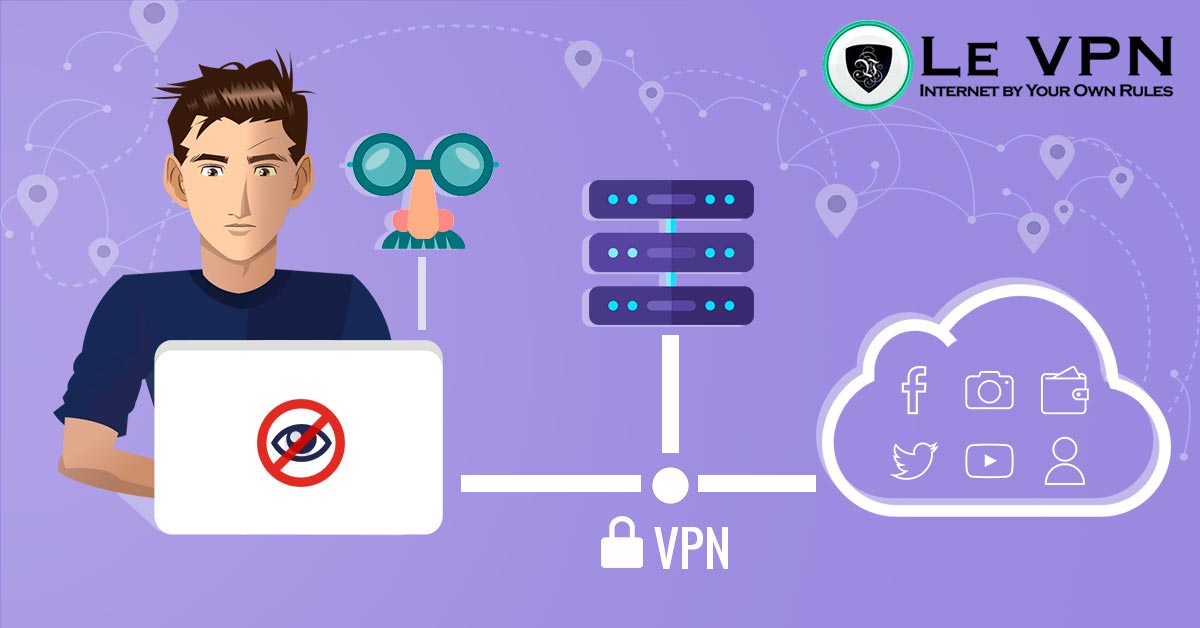
A VPN, or virtual private network, connects you to the internet through an encrypted tunnel to a server you choose. Everything between your device and that server is encrypted, and everything beyond it carries the server’s IP address instead of yours. That single change delivers several concrete benefits in a data-retention environment:
1. Your ISP's logs go dark
When you connect through a VPN, the only thing your ISP can record is that you exchanged encrypted traffic with a VPN server. The sites you visited, the services you used, the searches you made - none of it appears in the retained data. The legally mandated diary still exists, but its pages are effectively blank.2. Online tracking gets harder
Websites, advertisers, and data brokers build profiles keyed to your IP address. With a VPN, you appear to the internet as the VPN server's address, shared with other users - which breaks IP-based tracking and profiling. Combined with sensible browser hygiene, this drastically reduces how much of your activity can be stitched together into a targeted-advertising profile.3. Your connection is encrypted end-to-end to the server
VPN encryption doesn't just hide your activity from your ISP - it protects it from anyone in between: network administrators, compromised routers, and attackers on the same network. Le VPN uses modern protocols - OpenVPN, WireGuard, and IPSec/IKEv2 - that make intercepting your traffic computationally impractical.4. You can bypass censorship and blocks
Countries with heavy data retention often pair it with website blocking. Because your traffic exits from the VPN server's location, you can reach services that are blocked locally. And where governments actively detect and block VPN connections themselves, Le VPN's Stealth WireGuard protocol disguises VPN traffic to get through deep packet inspection in heavily censored countries.5. Public Wi-Fi becomes safe to use
Retention laws or not, open Wi-Fi networks in cafés, airports, and hotels are a snooper's playground. A VPN encrypts everything you do on them, so neither the hotspot operator nor anyone lurking on the network can see your activity or capture your credentials.Choosing the Right VPN for This Job
One caution: a VPN shifts your trust from your ISP to your VPN provider, so choose one whose business model is subscriptions, not data. Look for a provider with a clear privacy policy, strong modern protocols, and servers outside your own jurisdiction so your traffic can exit somewhere with better privacy norms.
Le VPN checks those boxes with servers in 100+ locations across the Americas, Europe, the Middle East, Asia-Pacific and Africa, up to 10 simultaneous connections per account, and easy apps for every major platform. You can verify exactly what the outside world sees - before and after connecting - with our IP address test.
Conclusion
Data retention laws mean that in many countries, a detailed log of your online life is being written for you, stored for years, and made available to people you’ve never met. Using a VPN is the most direct way to opt out: your ISP’s mandatory records reduce to noise, trackers lose your address, and your connection stays encrypted wherever you are. If you’re ready to take your browsing history off the record, get Le VPN - with a 30-day money-back guarantee on your first purchase, there’s no risk in trying.
About the author

Le VPN Support Lead
Romain is a designer, analyst, and developer who has worked for several technology companies internationally in recent years. Founder of Magic Freelancer, he has collaborated with various blogs by writing articles on IT security news or producing popularization texts.
Articles by Romain Malburet →