Internet Privacy: What Are We Missing?
For well over a decade, internet privacy has ranked among the top concerns of the connected world. Everyone has heard of virtual private networks, and everyone knows - at least abstractly - the damage identity theft can do. So how do internet giants still make hundreds of billions a year from our data, and how do criminals still find such easy pickings?
The uncomfortable truth: until a privacy failure hits our own life or livelihood directly, most of us choose convenience and skip the defences.
But there are solutions - and they’ve become far more convenient than they used to be. Premium VPN providers now offer multi-platform apps with modern protocols like WireGuard that add barely any overhead. Keeping Le VPN switched on across your phone and computer - up to 10 devices at once on one account - means being protected all the time without noticing it’s there.
Forgoing Internet Privacy for Exposure
The old proverb goes: “May you be rich and not famous.”
There’s a good reason for the saying. As long as you have something, someone wants to take it from you. In internet society, if you “flex” what you have publicly, you’re recruiting people who want to take it.
Your free time, your reputation and your identity are worth more than you think, and much harder to replace. It may feel like your identity came free, but you’ve spent your whole life building it. Trading your privacy for internet visibility is a risk with a hidden price tag: influencer culture has turned oversharing into a career path, yet regulators still struggle to police disclosure and data-handling in that market, and most participants never read what they agreed to.
Discarding privacy and exposing yourself online can be devastating. Your digital security, your physical safety and your property can all be attacked by cybercriminals who assemble what you publish into a working profile of your life.
What Do the Numbers Say?
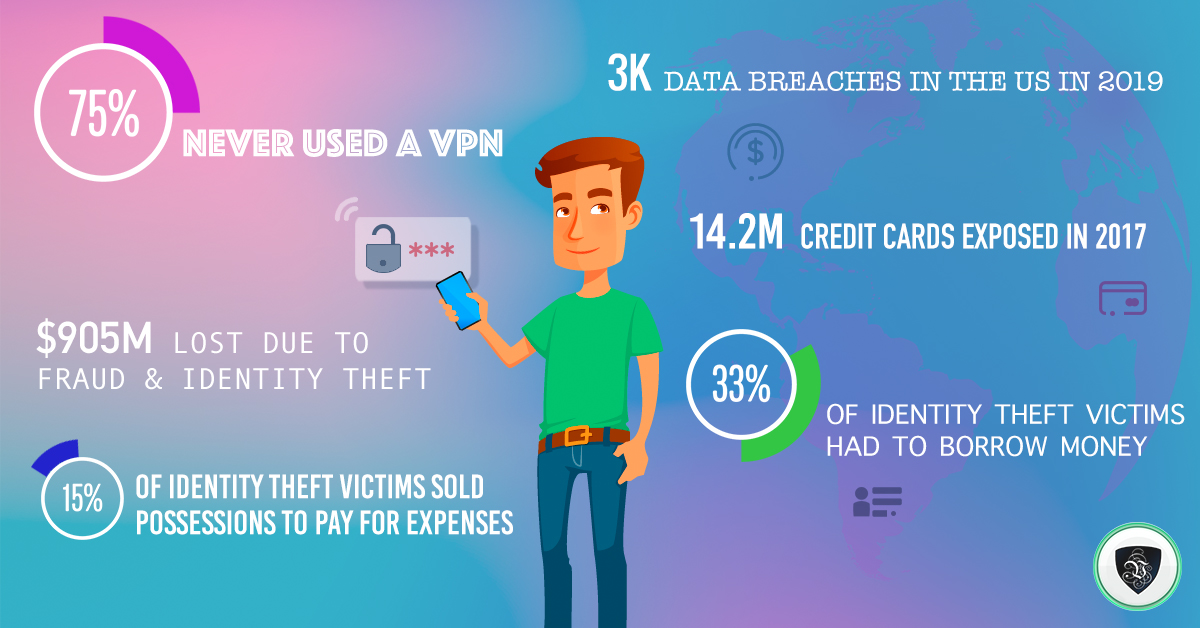
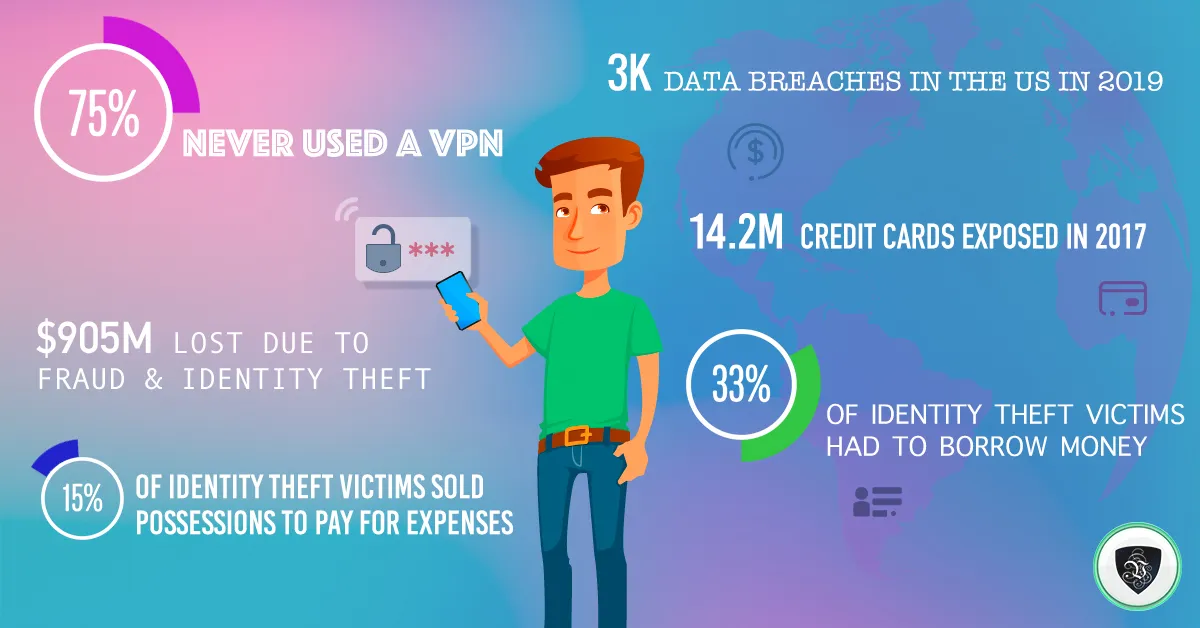
Despite years of privacy scandals, only a minority of internet users run a VPN regularly - surveys across Europe and North America consistently put habitual use at well under half of the online population, and the reasons for what a VPN is used for are often streaming rather than security.
That means most of the personal information we generate flows across the internet unfiltered and open for collection - and it is collected, industriously. Ad-driven platforms earn their revenue precisely by converting your behaviour into targeting data; their privacy policies are written to protect you from others, not from the platforms themselves.
The breach statistics tell the rest of the story. In 2017, the US alone recorded 1,579 data breaches exposing almost 180 million records. Since then the annual count has roughly doubled - recent years have repeatedly topped 3,000 reported compromises, with billions of records spilled worldwide, feeding a criminal economy of identity theft and fraud measured in billions of dollars every year. Unprotected browsing data floats through this ecosystem, waiting to be matched with the next leak.
Convenience vs. Security
The more we value accessibility - or the less we know about the risks - the likelier we are to become victims. That’s why children and seniors make up a disproportionate share of identity-theft cases.
Every online service we touch hands a first thread to whoever is watching. Pull one thread and the rest follows: merely knowing my IP location, a hacker can estimate my physical location, my region, and many of the services I use. Matched together, those scraps become a mosaic of someone’s identity - ready for phishing that sounds personal, or worse.
Daily Tasks
Every request to Siri, Alexa or Google Assistant sends your needs to the internet. You already assume the platform will use that data to tailor ads. But if the connection itself is unprotected, an eavesdropper on the network can collect your daily routine straight off the wire.
Location Data
Maps and navigation are genuinely useful - and they normalise being tracked continuously. Location history paints your commute, your home, your habits. If anyone compromises your phone or your accounts, they know your every step.
Communication Information
Chats and instant messages remain a major hole in online privacy - messaging platforms have repeatedly patched serious vulnerabilities and backdoors over the years. Because we use the platforms where our friends are rather than the platforms that are safest, our conversations are only as secure as the weakest server between us.
E-banking Access
We often switch the VPN off for banking apps, worried about friction - some banks flag logins from unknown locations. But accessing your money over an unprotected connection endangers the very passwords that guard all your accounts. The better habit: keep the VPN on and connect through a server in your home country, so your bank sees a familiar location and your session stays encrypted.
Always-On VPN, Everywhere
Protecting your privacy shouldn’t require sacrificing convenience - the two only stay balanced if protection is always on, on every device. Le VPN makes that practical: apps for Windows, macOS, iOS and Android, servers in 100+ locations, fast modern protocols with no perceptible lag, and up to 10 simultaneous connections so nothing you own is left exposed. With a 30-day money-back guarantee on your first purchase, the cost of finding out what you’ve been missing is exactly nothing.
About the author

Guest Author
Vuk Mujović is the founder of MacTíre Consulting, an analyst, data management expert, and a long-term writer on all things business & tech. He authored blogs, articles, and opinion pieces aimed to help both companies and individuals achieve growth without compromising their security.
Articles by Vuk Mujović →