
Internet Censorship in China
China operates the world's most sophisticated internet censorship system. Freedom House rated it the world's most restricted online environment in 2025 - and if you're travelling or living there, preparation matters more than anywhere else.
- Understand what's blocked and how
- Stealth protocol built for heavily filtered networks
- Set up before you travel - VPN sites are blocked there
- Encrypted, no-logs connection for your privacy
- 30-day money-back guarantee - try risk-free
Country background
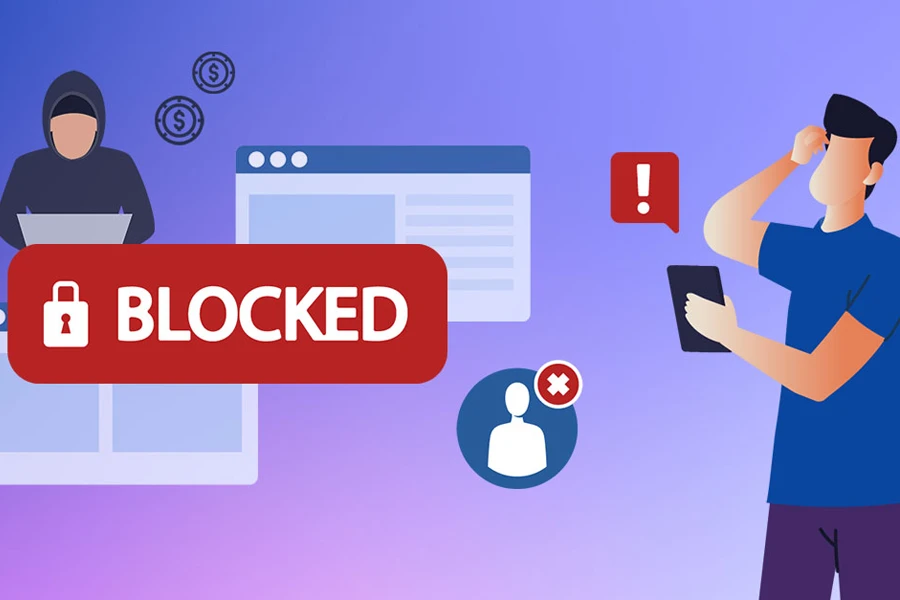
Internet censorship in China is pervasive. A range of laws and regulations at the provincial and national levels allow government agencies to control access to individual websites and actively monitor citizens' internet use. The national filtering system - known abroad as the Great Firewall - is the world's most sophisticated censorship apparatus, and researchers have found that provincial-level authorities sometimes block content at a scale many times larger than the national system itself.
With over a billion internet users, China is the world's largest online population - yet the day-to-day experience is unlike anywhere else. Alongside blocked websites, many users practise self-censorship, understanding that online behaviour is monitored and scrutinised. In its 2025 Freedom on the Net report, Freedom House scored China 9 out of 100 - the world's worst environment for internet freedom for over a decade running.
Censorship in action
Officially, censorship policy targets "harmful information" such as pornography, violence and gambling. In practice, most blocking serves political stability: search results are filtered for topics like democracy, free speech and politically sensitive issues, and thousands of websites are blocked entirely - including Google, YouTube, Facebook, Instagram, X, Netflix, Wikipedia, and major news outlets like The New York Times and the BBC.
The technical toolkit includes IP blocking, URL filtering, keyword filtering and traffic analysis, and the regulator announced in early 2025 that platforms had removed more than a million pieces of content. The system's reach extends to the infrastructure itself: in August 2025, the firewall disrupted essentially all HTTPS connections on port 443 nationwide for over an hour - briefly severing much of the foreign internet for users across the country.

The impact of internet censorship in China
The control of public opinion online has been called China's biggest engineering project. Censorship has greatly restricted free speech and independent journalism: international organisations consistently rank China at or near the bottom of global press-freedom and internet-freedom indexes.
Censorship is big business, too. By restricting international competition, domestic companies have grown into some of the largest in the world, and surveillance technology developed for the domestic market has been exported to other restrictive states. For residents, expats and travellers alike, the practical result is the same: a large part of the everyday internet - mail, maps, search, social media, news - is simply unreachable without help.

Using a VPN to avoid internet censorship in China
A VPN routes your traffic through an encrypted tunnel to a server outside the country, letting you reach the open internet as if you were connecting from there. Because the firewall actively detects and blocks standard VPN protocols, an ordinary VPN often stops working in China - Le VPN's Stealth protocol is designed for exactly this situation, disguising VPN traffic as ordinary encrypted traffic so it keeps working on heavily filtered networks.
Two things to know before you go. First, set up and test your VPN before travelling - VPN providers' websites are blocked inside China, so signing up after you arrive can be difficult. Second, be aware of the law: only VPNs licensed by the Chinese authorities are fully legal, and using an unauthorized VPN carries a potential fine of up to about RMB 5,000. Enforcement has historically focused on providers rather than individual users, but you should weigh the current rules for yourself when deciding.

Get prepared in 3 easy steps

Step 1
Sign up before you travel
Choose your subscription plan while you still have open access. Every plan includes a 30-day money-back guarantee.

Step 2
Install and test the app
Install Le VPN from our downloads page and confirm the Stealth protocol connects before departure.

Step 3
Connect to an open country
Once there, pick a nearby server outside the firewall, hit Connect, and reach your usual mail, maps, news and social apps.

Trusted by 1,000,000+ users
30-Days Risk Free Guarantee
Try Le VPN with no commitment! If you're not satisfied in the first 30 days, let us know, and you'll get your money back.

Download the latest Le VPN app for all devices




Also available on


Quick recap
China runs the world's most sophisticated internet censorship system - the Great Firewall - which blocks thousands of sites (Google, YouTube, Facebook, Instagram, X, Netflix, Wikipedia and outlets like The New York Times and the BBC) and actively detects and blocks standard VPN protocols. A VPN routes your traffic through an encrypted tunnel to a server outside the country so you can reach the open internet, but only a protocol built for filtered networks reliably keeps working. Le VPN's Stealth protocol disguises VPN traffic as ordinary encrypted traffic for exactly this situation.
- China was rated the world's worst environment for internet freedom in Freedom House's 2025 report (score 9/100)
- The Great Firewall blocks Google, YouTube, Facebook, Instagram, X, Netflix, Wikipedia and major news sites, and filters search results on sensitive topics
- Standard VPN protocols are detected and blocked, so an ordinary VPN often fails - Le VPN's Stealth protocol disguises VPN traffic to keep working on heavily filtered networks
- Set up and test your VPN before you travel - VPN providers' websites are blocked inside China
- Know the law: only government-licensed VPNs are fully legal and an unauthorized VPN carries a potential fine of up to about RMB 5,000, with enforcement historically focused on providers rather than individual users
- 100+ server locations, up to 10 devices on one account, encrypted no-logs connection, 30-day money-back guarantee