Digital Nomad Security in 2026: VPN Essentials for the Remote Worker
The New Reality of Work Without Borders
The landscape of professional life has undergone a seismic shift. By 2026, the digital nomad population has exceeded 40 million, with the U.S. contributing 17.3 million. This isn't just a trend - it's a fundamental restructuring of how we approach work, productivity, and lifestyle. There are now an estimated 43 million digital nomads worldwide as of 2026.What makes this movement particularly significant is its economic impact. Digital nomads contribute a global economic value of $940 billion per year. These aren’t casual travelers dabbling in freelance work; dominated by full-time remote workers, they earn between $75,000 and $250,000 annually. The digital nomad lifestyle has evolved from a fringe experiment into a legitimate, economically powerful way of working.
Yet with this freedom comes a unique set of challenges. Over half of the digital nomads could not find a reliable Wi-Fi connection. 52% of digital nomads find it difficult to find a reliable and safe Wi-Fi connection for work and communication. Beyond connectivity issues, security concerns loom large over this mobile workforce.
The Expanding Threat Landscape for Remote Workers
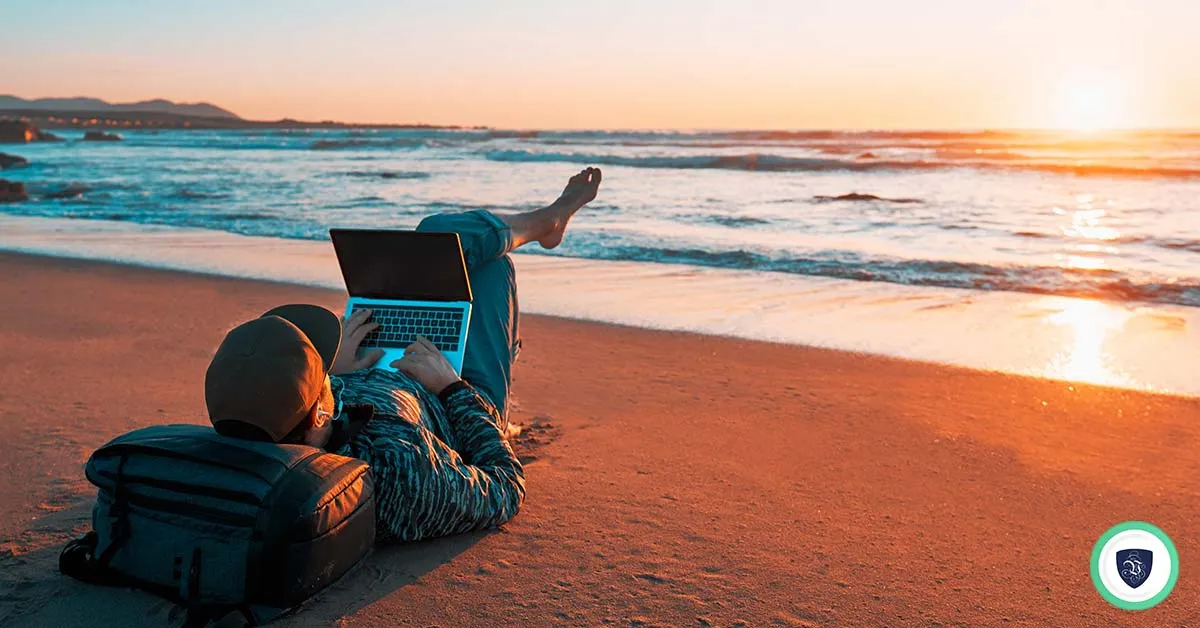
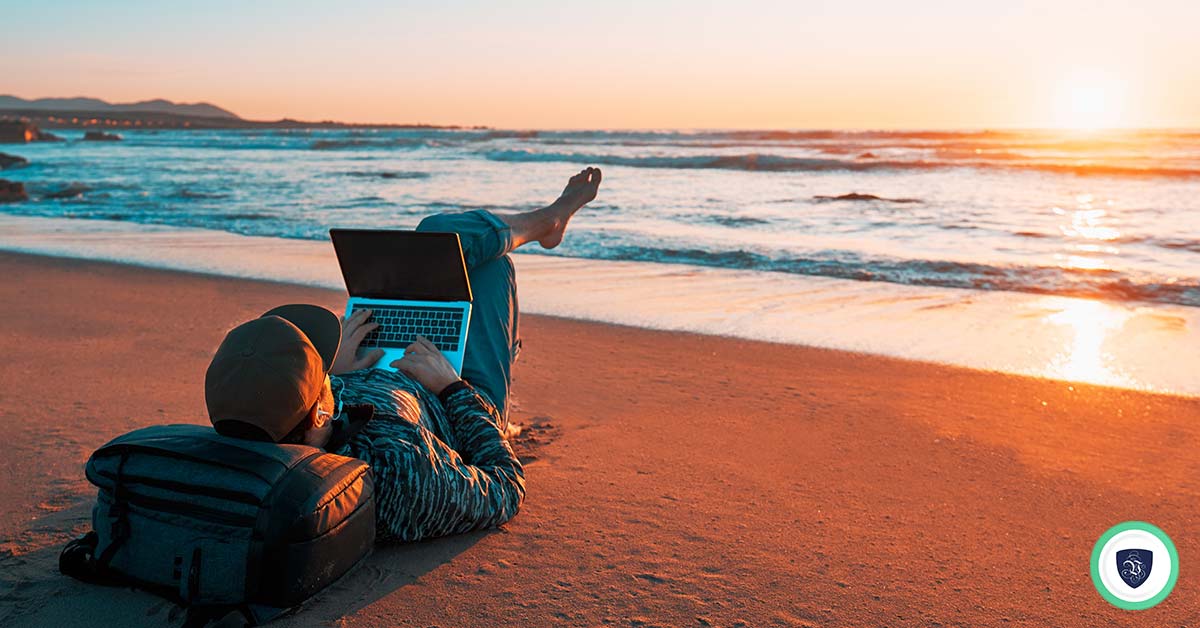
Working from a beachside café in Bali or a coworking space in Lisbon sounds idyllic, but these environments present cybersecurity challenges that traditional office workers never face. Remote workers are 3x more likely to expose data unintentionally due to three key factors: unsecured home networks with vulnerable IoT devices and routers, personal devices (BYOD) lacking enterprise security controls, and increased use of unauthorized shadow IT applications.The threat landscape has evolved dramatically. Nearly three-quarters (74%) of IT decision-makers said that AI-powered attacks significantly threaten their organization’s security, according to the “2025 Armis Cyberwarfare Report.” Cybercriminals have become more sophisticated, targeting the very flexibility that makes remote work attractive.
Such attacks tend to be more successful when aimed at remote workers, said independent consultant Sushila Nair, former head of security services at Capgemini’s North American practice. “Research has found that people working from home can be more distracted and they’re more likely to click on suspicious links,” said Nair.
The Public WiFi Minefield
For digital nomads, public WiFi is both a lifeline and a liability. As of 2026, public WiFi still poses significant cybersecurity risks. The dangers are multifaceted and often invisible to the average user.The main security risks of public WiFi are related to data theft - intercepting your information using a fake hotspot, redirecting you to phishing sites or distributing malware to your device. One of the most insidious threats is the man-in-the-middle attack. The biggest threat on an unsecured network is a tactic known as a “Man-in-the-Middle” attack. Because open networks in cafes or airports do not require a unique, encrypted password to join, any data you send over the air is completely visible. A hacker sitting three tables away with a laptop can easily intercept your wireless traffic.
When you connect to a public Wi-Fi network, there is a good chance that the network is not legitimate. It can be a “honeypot network,” which is a Wi-Fi network with a similar name injected with malware to extract your information once you connect to it. This usually happens in hotels. The attacker may also create a super-identical network with auto-connect enabled without your knowledge, also known as an “evil twin” network.
Understanding Your Digital Vulnerability Points
The modern digital nomad juggles multiple devices, networks, and applications daily. Each connection point represents a potential vulnerability. As digital nomads, it's not uncommon to use a medley of devices – from laptops to tablets and smartphones. Each device, with its own set of applications and configurations, can become an entry point for threats. It's not just about securing one primary device but ensuring each device in this digital arsenal is fortified. Achieving consistent security measures across all these devices becomes crucial yet challenging.The Home Network Illusion
Many remote workers assume their home network is inherently safer than public WiFi. This assumption can be dangerous. Routers are often left with factory-default settings, including weak passwords and outdated firmware that lack patches for known vulnerabilities. Unlike corporate networks managed by professional IT teams, home environments rely on users with limited technical knowledge, making security hygiene inconsistent and unreliable. Additionally, home networks typically serve multiple devices and users, including family members whose activities may introduce risk.Outdated routers, IoT devices, and shared Wi-Fi environments expose work traffic to risk. That smart speaker, fitness tracker, or security camera connected to your home network could be an entry point for attackers seeking access to your work data.
The Shadow IT Problem
Digital nomads often adopt tools and applications that make their work easier, sometimes without considering security implications. Shadow IT: The increase in unsanctioned tools and software, known as shadow IT, further complicates security. Personal file-sharing services and unapproved communication platforms can bypass security policies and introduce vulnerabilities unknown to IT teams.This becomes particularly problematic for nomads working with multiple clients or companies. The convenience of using a personal Dropbox account or a free project management tool can create security gaps that sophisticated attackers exploit.
Building Your Digital Defense Strategy
Security doesn't have to be complicated, but it does need to be comprehensive. The foundation of digital nomad security rests on several key pillars.The VPN Imperative
A Virtual Private Network isn't optional for digital nomads - it's essential. A virtual private network (VPN) encrypts your network traffic, which is essential for a safe remote work environment. It protects your company's digital assets against potential cybersecurity threats, secures remote access to internal networks, protects while connected to public networks, and eases remote collaboration.The encryption provided by a VPN creates a secure tunnel for your data. A VPN (Virtual Private Network) should be your primary safety tool whenever you’re online. It encrypts all your traffic before it leaves your device, keeping it safe from prying eyes. This way, your public Wi-Fi connection becomes a lot more secure.
When selecting a VPN service, digital nomads should prioritize several factors. Server availability and reliability (30%) played the biggest role in my assessment. I looked for providers offering a wide global presence with stable connections that maintained uptime and consistent access to collaboration tools like Slack, Microsoft Teams, and Zoom, essential for seamless remote work.
Le VPN offers digital nomads a robust solution with servers in over 100 locations worldwide, including popular digital nomad destinations like Thailand, Portugal, Mexico, and Indonesia. The service’s Stealth protocol, based on obfuscated WireGuard, is particularly valuable for nomads working in countries with internet restrictions or censorship, ensuring uninterrupted access to essential work tools and services.
Multi-Layered Authentication
Passwords alone are no longer sufficient protection. Strong authentication, including the widespread adoption of multi-factor authentication (MFA), is crucial for reducing risks in remote environments. MFA requires users to provide an additional verification method, such as a one-time code or biometrics, beyond just a password, effectively blocking many forms of credential-based attacks. Implementing MFA for all remote access points, including email, VPNs, and cloud applications, greatly enhances security posture.For digital nomads who frequently change phone numbers when traveling, it’s best to use an authenticator app rather than SMS for MFA. Apps like Google Authenticator or Authy work regardless of your phone number or location.
Password Management Best Practices
Weak or recycled passwords are one of the most common data breach causes. Digital nomads should be using strong and unique passwords to protect their online accounts. Strong passwords are difficult for cybercriminals to crack, and they help protect your sensitive information.Creating and remembering dozens of complex passwords is impractical. You can secure your data as a digital nomad by using a password manager. A password manager will securely store and protect your personal information from cybercriminals. Services like Bitwarden, 1Password, or Dashlane generate strong passwords and sync them across devices, making security convenient rather than burdensome.
Practical Security Habits for the Road
Beyond technical tools, digital nomads need to develop security-conscious habits that become second nature.Network Verification Protocols
Always verify the official network name and password with the staff at the hotel or cafe before connecting. This simple step can prevent connection to malicious "evil twin" networks designed to steal your data.When connecting to any new network, disable automatic connection features. Chances are that the auto-connect feature is active on your device. While very convenient, it can become a weak point in your online security. For your own safety, it’s better to keep your Wi-Fi off when you’re not using it.
Device Security Fundamentals
Physical security matters as much as digital security. Physical Security: Before we even dive into the technicalities, let's address the basics. Devices should be treated with the same care as one's passport or wallet. Implementing lock screens on all devices adds an essential layer of protection, ensuring unauthorized users can't easily access your information.Keep all software updated. When software has security loopholes or bugs, its developers make updates to fix them. For the best chance at security, make sure your OS and apps are always up to date. Enable automatic updates when possible to ensure you’re protected against the latest vulnerabilities.
Data Backup Strategies
The thought of losing all your photos, documents, and digital life is terrifying, but it can and does happen. To protect against data loss, ensure you are backing up regularly. Using physical storage such as an external hard drive is a good start, but these devices can fail.Implement a 3-2-1 backup strategy: three copies of your data, on two different types of media, with one copy stored offsite (cloud storage). This ensures you can recover from device theft, hardware failure, or ransomware attacks.
Threat Protection Beyond the Basics
As cyber threats evolve, digital nomads need protection that goes beyond traditional antivirus software.Advanced Threat Detection
Modern security solutions offer real-time protection against emerging threats. Le VPN's Threat Protection feature actively blocks trackers, phishing attempts, and malware before they reach your device. This proactive approach is particularly valuable when working from unfamiliar networks where threats may be more prevalent.Phishing attacks have surged, deceiving employees into revealing sensitive information or downloading malware via seemingly legitimate emails. Social engineering tactics have become more sophisticated, exploiting the isolation of remote work. Protection tools that filter malicious content at the network level provide an essential layer of defense.
Monitoring for Data Breaches
Digital nomads often use their email addresses across numerous services and platforms. Le VPN's Data Breach Scanner checks whether your email and associated data have been compromised in known breaches, allowing you to take immediate action to secure affected accounts.This proactive monitoring is crucial because Insider threats climbed 58% with remote work adoption as 63% of businesses suffered data breaches. Comprehensive analysis reveals why home networks, shadow IT, and BYOD policies created the perfect storm for insider risk in 2025.
Geographic Considerations for Digital Nomads
Different countries present unique cybersecurity challenges. Different countries present varied cybersecurity landscapes, driven by distinct regulations, norms, and threat levels. A country that may be stringent in its cyber laws and enforcement might offer a safer digital environment compared to one with lax regulations. On the flip side, some regions may harbor sophisticated threat actors or particular types of scams that are less prevalent elsewhere.Understanding local regulations is important. Governments are increasing tax and social security enforcement on remote workers. While a VPN protects your data, it’s important to comply with local laws regarding remote work and taxation.
Some countries implement internet censorship or restrictions that can interfere with work. Le VPN’s Stealth protocol, based on obfuscated WireGuard, can bypass these restrictions, ensuring you maintain access to essential tools and services regardless of location. With servers in countries like China, UAE, Turkey, and Vietnam, digital nomads can work confidently even in regions with strict internet controls.
Balancing Security with Productivity
Security measures shouldn't impede productivity. The key is finding solutions that work seamlessly in the background.Modern VPN protocols reduce speeds by less than 10% on typical broadband connections. All four services tested comfortably support Zoom, Microsoft Teams, and Google Meet without perceptible quality loss. This means you can maintain security without sacrificing the performance needed for video calls, file transfers, and cloud-based work.
Split tunneling features allow you to route work traffic through a VPN while accessing local services directly. Some services (certain streaming platforms, local banking apps) may work better with direct connections, while business applications benefit from VPN encryption. All four services reviewed support split tunneling, though implementation details vary by platform and operating system.
The Human Element: Security Awareness
Technology provides the tools, but human awareness remains the weakest link in cybersecurity. Stay up-to-date: The cybersecurity landscape is constantly evolving, so it's essential to regularly seek out new information. Focus on practical advice: Look for resources that provide actionable tips and guidance that you can implement in your daily life as a digital nomad.You should be able to recognize cyber attacks to avoid falling for them. Understanding common attack vectors - phishing emails, suspicious links, fake websites - helps you make better decisions in real-time.
Social Media Caution
Social media platforms are a great way to stay connected and showcase your travel experiences to loved ones. They can also expose you to potential cyber threats. Be cautious about what you share on social media, especially if your accounts are available to a public audience.Avoid posting real-time location information or details about your work setup. This information can be used by criminals to target you for physical theft or digital attacks.
Creating Your Personal Security Checklist
A simple cybersecurity checklist can go a long way in keeping you protected while working on the move. Before connecting to any network, make sure you're using a VPN, enable multi-factor authentication on all important accounts, and keep your devices updated with the latest security patches. Use strong, unique passwords, regularly back up your data, and avoid accessing sensitive information on unsecured networks. These small but consistent habits can significantly reduce your risk and help you stay focused on your work, no matter where you are.Your daily security routine should include:
Before connecting to any network: Verify network authenticity with staff, enable your VPN, and check that your firewall is active.
During work sessions: Avoid accessing highly sensitive information on public networks, use HTTPS websites exclusively, and keep file sharing disabled.
End of day: Log out of all services, clear browser cache if using a shared device, and ensure all devices are physically secured.
Weekly maintenance: Check for software updates, review account activity for suspicious logins, and verify backup completion.
The Future of Digital Nomad Security
The future of remote work security in 2026 is shaped by identity, behaviour, and design. As work continues to happen everywhere, organisations must move beyond traditional security models and embrace approaches that account for how people actually work. By strengthening identity controls, reducing reliance on network trust, and supporting secure behaviour, businesses can protect both their professionals and their data.The digital nomad lifestyle represents the future of work for millions of professionals. Digital nomadism in 2026 will be mainstream and more of the “norm”. With over 40 million people worldwide now identifying as digital nomads, this lifestyle is clearly reshaping how global talent moves and works.
Security doesn’t have to limit freedom. With the right tools and habits, digital nomads can work from anywhere while maintaining robust protection for their data and privacy. A comprehensive VPN service like Le VPN, combined with multi-factor authentication, password management, regular backups, and security awareness, creates a defense-in-depth strategy that protects without constraining productivity.
At the end of the day, the digital nomad lifestyle is all about freedom, but that freedom should not come at the cost of your security. By being aware of potential risks and taking proactive steps to protect your data, identity, and online presence, you can confidently work from anywhere in the world. Cybersecurity is not just a technical concern- it is an essential part of sustaining your business, your reputation, and your peace of mind. Winter travel can pose additional challenges, but with the right preparations, digital nomads can navigate these with ease.
The world is your office. Make sure it’s a secure one.
About the author
Le VPN Blog Editor
Alan Summers has been writing and editing for the Le VPN blog for years, covering online privacy, cyber security, and the best ways to get the most out of a VPN. He keeps a close eye on the news that affects internet freedom around the world and turns it into practical advice for Le VPN readers.
Articles by Alan Summers →