

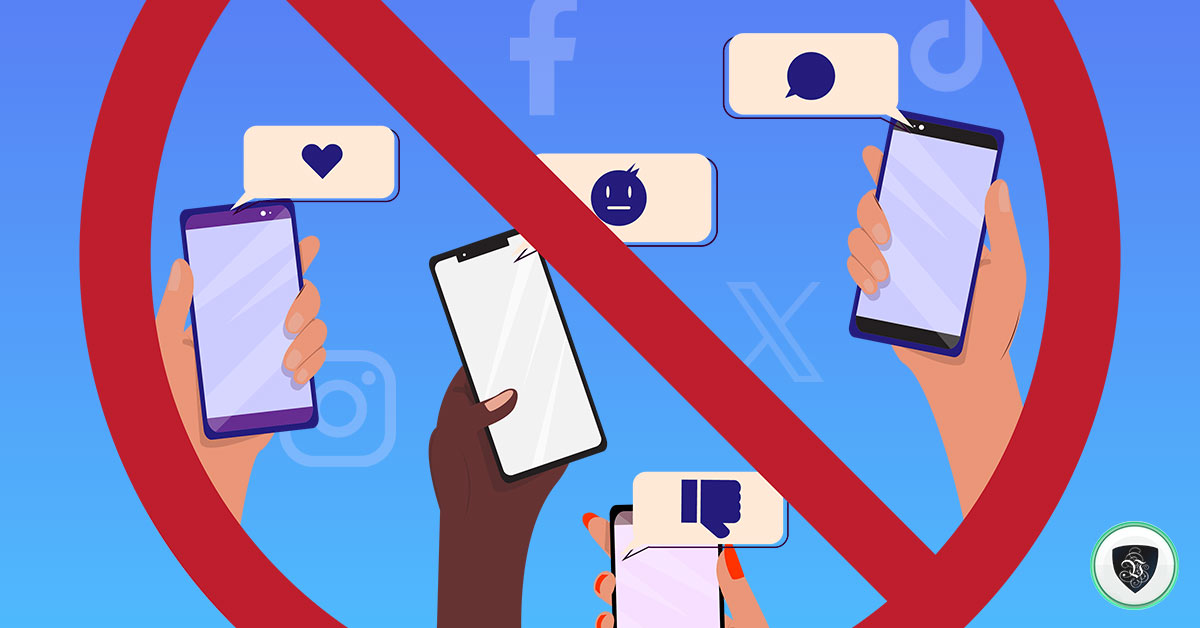
Bypassing Social Media Bans: Using VPNs to Access Blocked Platforms
The Growing Reality of Social Media Restrictions Worldwide
Social media has become an integral part of modern life, connecting billions of people across the globe. Yet, access to these platforms is far from universal. As of 2024, the only countries to continually ban access to the social networking site are: China, Iran, North Korea, Myanmar, Russia, Turkmenistan and Uganda, with Facebook being one of the most commonly restricted platforms. However, the landscape of social media censorship extends far beyond these permanent bans.
After collecting 21 billion measurements across 221 countries over 20 months, they found an uptick in Internet censorship incidents in 103 countries. That’s nearly half the world! This alarming trend demonstrates that internet restrictions are no longer confined to authoritarian regimes but have spread to democracies and countries once considered bastions of internet freedom.
Recent developments have shown an acceleration in this trend. These efforts have only intensified since the war began, with authorities blocking major social media sites X (formerly Twitter), Facebook and Instagram in Russia, while Taiwan’s government has ordered a one-year block of a popular, Chinese-owned social media app following its failure to cooperate with authorities over fraud-related concerns. The reasons for these bans vary widely, from national security concerns to attempts to control information flow during political unrest.
Understanding Why Governments Block Social Media
The motivations behind social media bans are complex and multifaceted. Governments and organizations often restrict access to social media for various reasons, including: Political Censorship: Some countries block social media to control the flow of information and limit dissent. This represents the most common justification for permanent or long-term restrictions.
Freedom House estimated in 2022 that 4.5 billion people on Earth have access to the internet—and that in 76% of those countries, individuals have been arrested or imprisoned for content they’ve posted online. This staggering statistic reveals the extent to which governments monitor and control online expression, using social media bans as one tool in a broader arsenal of digital control.
Beyond political control, governments cite various other reasons for restricting social media access. Some nations implement temporary blocks during sensitive periods such as elections or civil unrest. These deliberate blackouts – ranging from nationwide internet blackouts to regional social media blocks – disrupted communications and vital services, often around elections, protests, or even school exams. For example, Iraq repeatedly shut down the internet during exam periods, and Kenya blocked Telegram for three weeks during national exams.
The Technical Mechanisms Behind Social Media Blocks
Understanding how social media bans work is crucial for anyone seeking to circumvent them. When social media platforms and websites identify an IP address that should not be able to access the restricted content, they block it. Your IP address provides your actual location and identifies your device online. It enables websites to identify your IP address and decide whether to allow or prohibit your device.
Governments and internet service providers employ several technical methods to enforce these restrictions. DNS tampering — Internet users in the given country are blocked from viewing entire websites. DNS stands for Domain Name System and DNS tampering refers to the removal of domain names from a country’s list of accessible or available websites. This method essentially prevents your computer from translating a website’s name into the numerical address needed to connect to it.
Another common technique is IP blocking, which works in reverse by preventing specific devices or addresses from accessing certain content. More sophisticated censorship systems employ Deep Packet Inspection (DPI) to analyze internet traffic in real-time, identifying and blocking specific types of content or communication protocols.
How VPNs Enable Access to Blocked Platforms
Virtual Private Networks have emerged as the primary tool for bypassing social media restrictions. A VPN works by creating a secure VPN connection between your device and a server located in another country. When you connect to the internet through a VPN, your internet traffic is routed through this server, making it appear as though you are accessing the internet from the server’s location.
This fundamental mechanism allows users to circumvent geographic restrictions and censorship. You access the internet not with your own IP address, but with the IP address of that VPN server. To internet service providers, it will look like you’re located in the country you’ve selected. This geographical spoofing is the key to accessing blocked social media platforms.
The effectiveness of VPNs in bypassing censorship has been demonstrated repeatedly. A virtual private network (VPN) is a powerful and easy-to-use tool that allows anyone to bypass the most popular methods of censoring the internet. When you connect to a VPN server in a country where your desired social media platform is accessible, you can use that platform as if you were physically located in that country.
Advanced VPN Features for Defeating Sophisticated Censorship
As governments become more sophisticated in their censorship efforts, VPN providers have developed advanced features to maintain access. One of the most important innovations is protocol obfuscation, which disguises VPN traffic to make it appear as regular internet traffic. This is particularly crucial in countries like China and Russia, where authorities actively attempt to detect and block VPN connections.
OpenVPN and WireGuard in TCP mode, can be highly effective at defeating censorship, as it makes VPN traffic look like routine HTTPS(new window) internet traffic. This makes it extremely difficult for censors to distinguish between encrypted VPN traffic and normal secure web browsing.
Stealth protocols represent the cutting edge of anti-censorship technology. These specialized protocols are specifically designed to bypass VPN detection systems. By making VPN connections indistinguishable from regular internet traffic, stealth protocols can work even in heavily censored environments where standard VPN protocols are blocked.
Le VPN’s stealth untraceable and unblockable protocol, based on obfuscated WireGuard technology, exemplifies this approach. This protocol can bypass even the most sophisticated censorship systems, ensuring users maintain access to blocked social media platforms regardless of the restrictions in place.
Practical Steps to Access Blocked Social Media
For those facing social media restrictions, implementing a VPN solution involves several straightforward steps. First, you need to select a reliable VPN provider with servers in countries where your desired social media platforms are accessible. The provider should offer strong encryption, a no-logs policy, and ideally, specialized anti-censorship features.
Choose a Reputable VPN Provider: Not all VPNs are created equal. It’s essential to choose a VPN with strong encryption, a no-logs policy, and a wide range of server locations. Download and Install the VPN Software: Once you’ve chosen a provider, download the software or app on your device. Most VPNs offer applications for Windows, macOS, Android, and iOS.
After installation, the process is relatively simple. Connect to a VPN server located in a country where the social media platform you want to access is not blocked. For instance, if Facebook is restricted in your location, connecting to a server in the United States, United Kingdom, or most European countries will typically provide access.
Le VPN offers an extensive network spanning over 100 locations worldwide, including major hubs in the United States (New York, Los Angeles, Chicago, Silicon Valley, Seattle, Miami, Dallas, Atlanta, Ashburn), Europe (London, Paris, Amsterdam, Berlin, Stockholm), and Asia (Singapore, Hong Kong, Tokyo, Seoul), providing users with numerous options for bypassing geographic restrictions.
The Legal and Ethical Considerations
While VPNs are powerful tools for accessing blocked content, users must understand the legal implications in their jurisdiction. While VPNs are legal in many countries, we found that they are illegal or heavily regulated in countries that need VPNs the most. This paradox creates a challenging situation for users in heavily censored regions.
2024: China continues to crack down on unauthorized VPN use. Multiple individuals have received administrative penalties for bypassing the Great Firewall to access blocked social media platforms. This demonstrates that using VPNs in certain countries can carry real legal risks, including fines and potentially more severe penalties.
However, it’s important to note that In the U.S., it’s legal to use VPNs; even the FBI recommends them for more online privacy. In most democratic countries, VPN use remains legal and is increasingly recognized as an important privacy tool. The legal status varies significantly by country, so users should research their local laws before using a VPN to bypass restrictions.
The Emerging Challenge: Age Verification and Social Media Bans
A new dimension to social media restrictions has emerged with age-based bans. Starting Dec. 10, all Australians under the age of 16 will be banned from social media. The list of banned platforms currently includes TikTok, Facebook, Instagram, Threads, X, Snapchat, YouTube, Reddit, Kick and Twitch. This represents a fundamentally different approach to social media restriction, targeting specific age groups rather than entire populations.
If the ban indeed goes through, Australia would be the first country to institute such a measure, but other countries seem poised to follow suit as more details (and lawsuits) emerge about the harms of social media on young users’ mental health. Denmark and Malaysia have plans to institute bans next year, and similar proposals have emerged in countries like France, Norway, and the entire European Union in recent months.
These age-based restrictions present unique challenges for enforcement and raise questions about the role of VPNs. Many teens that do get banned are also likely to resort to VPNs to evade it, similar to the citizens of other countries with social media bans who have done so in the past. This prediction has already begun to materialize, with discussions about VPN use increasing among affected demographics.
The Technical Arms Race: Blocking VPNs
As VPN usage has increased in response to censorship, some governments and legislators have begun targeting VPNs themselves. It’s unfortunately no longer enough to force websites to check your government-issued ID before you can access certain content, because politicians have now discovered that people are using Virtual Private Networks (VPNs) to protect their privacy and bypass these invasive laws. Their solution? Entirely ban the use of VPNs. Yes, really.
This escalation represents a significant threat to online privacy and freedom. Here’s what will actually happen: People who want to bypass it will use non-commercial VPNs, open proxies, or cheap virtual private servers that the law doesn’t cover. They’ll find workarounds within hours. The technical reality is that completely blocking VPN access is extremely difficult, if not impossible, without severely damaging legitimate internet functionality.
As users turn to VPNs to circumvent censorship, international locations like China and Russia are imposing measures to block VPN services and penalize their use. However, the development of advanced protocols and obfuscation techniques continues to stay ahead of these blocking efforts in most cases.
Protecting Privacy While Accessing Social Media
Beyond simply bypassing blocks, VPNs offer crucial privacy protections for social media users. It prevents your ISP from seeing what you do online, and since repressive governments rely on ISPs to monitor their customers, it also prevents your government from knowing what you do online. This privacy protection is particularly important in countries where social media activity is monitored and can lead to legal consequences.
When using a VPN to access social media, encryption plays a vital role. All data transmitted between your device and the VPN server is encrypted, preventing third parties from intercepting or reading your communications. This is especially important when accessing social media over public Wi-Fi networks or in countries with extensive surveillance infrastructure.
Le VPN employs strong encryption protocols and secure technologies to protect users’ data. The service’s threat protection feature adds an additional layer of security by blocking trackers, phishing attempts, and malware, ensuring that users remain safe while accessing social media platforms through potentially hostile networks.
The Broader Implications for Internet Freedom
The proliferation of social media bans and the corresponding rise in VPN usage reflect broader tensions about internet freedom and government control. People in at least 57 of the 72 countries covered by Freedom on the Net 2025 were arrested or imprisoned for online expression on social, political, or religious topics during the coverage period—a record high.
This trend toward increased censorship has significant implications for freedom of expression, access to information, and the ability of citizens to organize and communicate. Government censorship typically relies heavily on telling domestic internet service providers (ISPs) to block access to social media or domains that are showing content that the government doesn’t want to get out. VPNs represent one of the few effective tools available to ordinary citizens to resist this control.
Governments worldwide intensified online censorship in 2024 and early 2025 through internet shutdowns, platform bans, legal takedown demands, and arrests for social media activity. It was a record year for internet shutdowns: 296 shutdowns across 54 countries in 2024, a sharp increase from 283 shutdowns in 39 countries the year before. Conflict and political unrest were the top triggers – Myanmar (85 shutdowns) and India (84) led the list.
Economic Impacts of Social Media Restrictions
The economic consequences of social media bans and internet censorship are substantial and often overlooked. In 2024, intentional internet outages (including nationwide blackouts and social platform blocks) cost the global economy an estimated $7.69 billion. This figure, calculated by monitoring group Top10VPN, represents lost productivity, e-commerce, and investor confidence due to ~88,000 hours of shutdowns worldwide.
These economic impacts extend beyond immediate business losses. Content creators, digital marketers, small businesses, and entrepreneurs who rely on social media platforms for their livelihoods face severe disruptions when access is blocked. The rise of the creator economy has made social media access not just a matter of communication, but of economic survival for millions of people worldwide.
For businesses operating internationally, social media restrictions create operational challenges. Companies need to maintain communication with customers, manage brand presence, and coordinate marketing efforts across multiple platforms. When access is blocked in certain regions, businesses must find alternative solutions, often turning to VPN services to maintain their operations.
Choosing the Right VPN for Bypassing Social Media Bans
Not all VPN services are equally effective at bypassing social media restrictions. Several factors determine a VPN’s ability to provide reliable access to blocked platforms. Server network size and distribution is crucial – a VPN with servers in many countries provides more options for finding an accessible connection point.
Second, you should consider the VPN’s server network. A VPN with servers located in multiple countries will give you more options for bypassing censorship and accessing content from different regions. Additionally, the VPN should offer specialized anti-censorship features such as obfuscated servers, stealth protocols, and the ability to bypass Deep Packet Inspection.
Connection speed and reliability are also important considerations. Slow or unstable connections can make social media use frustrating or impossible. Quality VPN providers invest in high-speed infrastructure and regularly update their technology to maintain performance even when routing traffic across long distances.
Le VPN’s multiprotocol support (WireGuard, OpenVPN, IKEv2, IPSec, PPTP, L2TP) ensures compatibility across different networks and censorship environments, while the stealth protocol specifically addresses the challenge of bypassing sophisticated blocking systems. The service’s 30-day money-back guarantee allows users to test its effectiveness in their specific situation without financial risk.
Best Practices for Maintaining Access
Successfully maintaining access to social media in restricted environments requires more than just installing a VPN. Users should implement several best practices to ensure consistent, secure access. First, always connect to the VPN before attempting to access blocked social media platforms. This prevents your ISP from seeing that you’re trying to access restricted content.
Regularly updating your VPN software is crucial, as providers continuously improve their anti-censorship capabilities and security features. Outdated software may be more vulnerable to detection and blocking. Additionally, if one server location becomes blocked or slow, try connecting to different servers in other countries.
For users in heavily censored environments, enabling additional security features is advisable. A kill switch prevents data leaks if the VPN connection drops unexpectedly, ensuring that your real IP address and location are never exposed. DNS leak protection ensures that all your internet traffic, including DNS requests, goes through the VPN tunnel rather than through your ISP.
The Future of Social Media Access and Censorship
The landscape of social media censorship and access continues to evolve rapidly. So far in 2025, 24 internet restrictions have been recorded in 10 countries/territories. The first six months of 2024 saw 20 restrictions in nine countries, with internet censorship going on to impact 4.8 billion people. This upward trend suggests that restrictions will likely continue to increase in the coming years.
Technological developments on both sides of this conflict will shape future access. Governments are investing in more sophisticated censorship technologies, including AI-powered content filtering and advanced traffic analysis systems. Governments are increasingly using AI to stumble on and censor undesirable content more efficiently. AI gear can quickly test and block content throughout large amounts of statistics.
Simultaneously, VPN providers and privacy advocates are developing new techniques to circumvent these restrictions. The ongoing development of more sophisticated obfuscation protocols, decentralized VPN architectures, and alternative routing methods suggests that the technical means to bypass censorship will continue to evolve.
Conclusion: The Importance of Digital Freedom Tools
As social media bans and internet censorship become increasingly common worldwide, VPNs have emerged as essential tools for maintaining access to information and communication platforms. The ability to bypass geographic restrictions and censorship represents more than just convenience – it’s a fundamental aspect of digital freedom and the right to access information.
For people living under censorship regimes, VPNs are often their only connection to vital resources and information their governments have banned. This reality underscores the critical importance of VPN technology in the modern digital landscape.
While the legal and technical landscape continues to evolve, the fundamental principle remains clear: individuals should have the ability to access information and communicate freely online. VPNs provide the technical means to realize this principle, even in the face of government restrictions and censorship. As censorship efforts intensify, the importance of reliable, secure, and effective VPN services will only continue to grow.
For anyone facing social media restrictions, whether due to geographic censorship, workplace limitations, or age-based bans, understanding how VPNs work and implementing them effectively can restore access to these vital communication platforms. The key is choosing a reputable provider with strong anti-censorship capabilities, robust security features, and a commitment to protecting user privacy in even the most challenging environments.
EXCLUSIVE DEAL
First 3 years for $2.22/mo